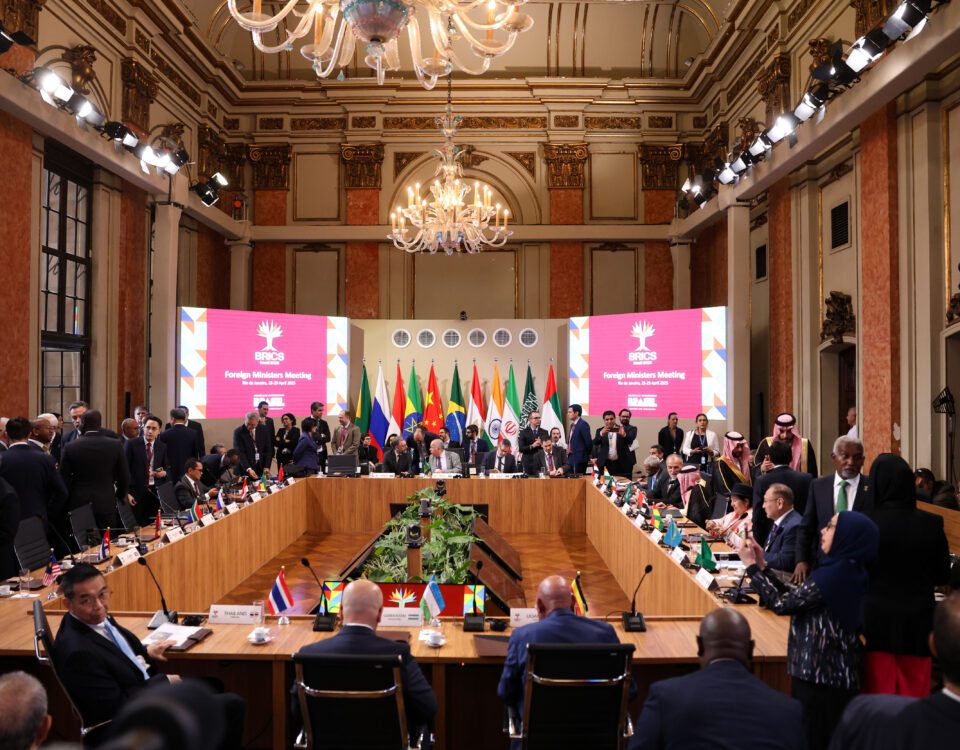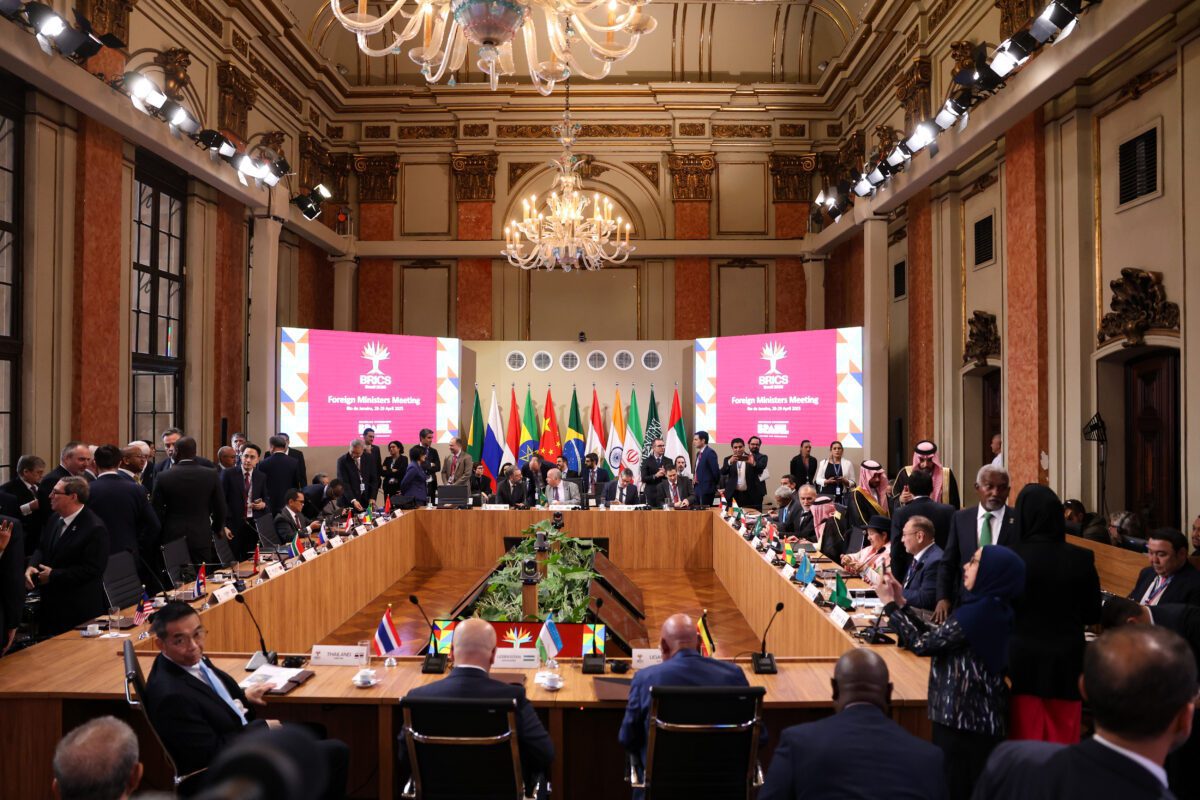



Historic event: BRICS Business Forum takes place this Saturday
4 de July de 2025
CBDCs from BRICS+: a new chapter in global financial modernization
8 de July de 2025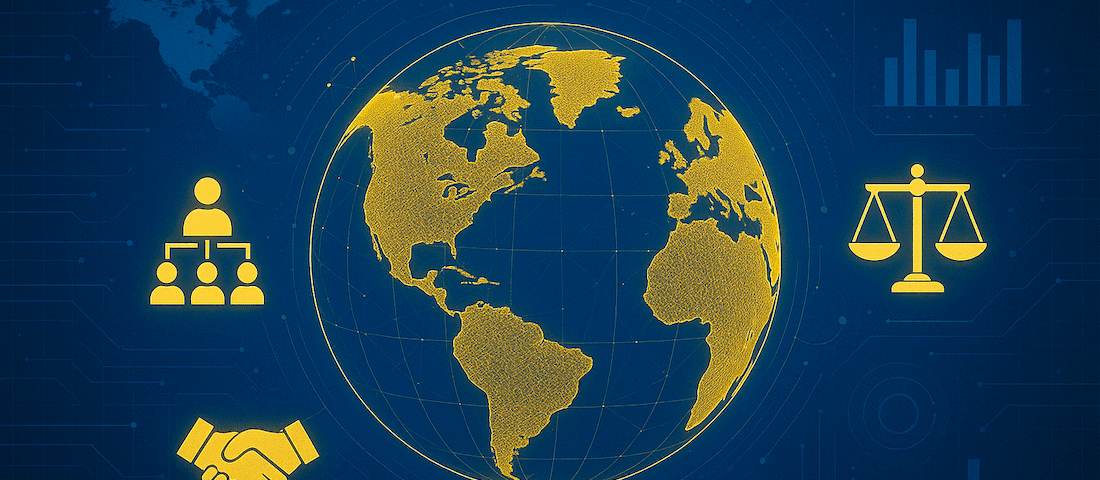
Proposed by BRICS+, a new model of global governance offers a path toward shared abundance.
The outdated international governance system—established after World War II—is showing clear signs of fatigue and incapacity to address today’s challenges. Institutions and forums like the IMF, World Bank, G7 and NATO exemplify an unsustainable model, based on power centralization and the exclusion of much of the world’s population.
By concentrating power in the hands of a few countries, this way of “governing the world” deepens inequalities, fuels conflict and undermines sustainable development. Rethinking global governance has therefore become urgent in order to secure stability, prosperity and justice in the 21st century.
The old model clearly shows signs of exhaustion by upholding an unequal and exclusionary system. The power imbalance is evident in the data:
- According to the IMF, more than 85% of its decisions are controlled by the United States and Western Europe, while developing countries — home to over 70% of the world’s population — have minimal influence on policies that directly affect their future.
- The OECD reports that African countries spend, on average, four times more on interest payments than on healthcare investments.
- The US dollar is used in around 88% of global transactions, leaving dozens of countries vulnerable to US monetary policy volatility — even if their economies have no direct ties to the US.
- Today’s global governance system exists to preserve the hegemony of core countries. The result is a world that is increasingly unstable, fragmented and vulnerable to systemic shocks.
We are living in a new era, with multilateralism gaining ground on the global stage. It is time to find new ways to address humanity’s modern challenges, such as climate collapse, record sovereign debt, endless wars, trade disputes, sanctions and food and energy insecurity.
BRICS+ emerges with a new path
The world is more interconnected than ever, meaning problems in one region affect everyone. New forms of cooperation between countries are needed. In this context, BRICS+ emerges as a more balanced, realistic and inclusive alternative to governance. The bloc’s expansion signals a shift from hegemony to multipolarity.
More than just an economic alliance, BRICS+ represents a geopolitical reorganization project rooted in sovereign cooperation, mutual respect and productive interdependence.
The New Development Bank (NDB), for instance, has already approved roughly US$35 billion in funding for member countries, focusing on infrastructure, energy and sustainable innovation — without imposing structural reforms or political conditions, a stark contrast to common IMF practices.
Additionally, financial mechanisms are being developed to gradually reduce dependence on the dollar, such as BRICS Pay and bilateral agreements in local currencies. These are already in use between countries like China and Saudi Arabia, and India and Russia. Such initiatives promote greater economic predictability and shield member states from instability and unilateral sanctions.
The system no longer works
The way the world is governed has become outdated. Global rules are mostly created by countries that control money, industries and technologies. This excludes most nations from important decisions, creating problems that breed more problems:
- Endless debt
Many African countries, for example, spend more on debt interest than on public health. This happens because the current system favors rich nations and imposes heavy costs on poorer ones. - Technology concentrated in few hands
Over 90% of climate-related technologies are patented by wealthy countries. This makes access difficult for poorer nations, undermining the global response to the climate crisis. - Economic sanctions and asset seizures
Some countries, like Russia and Iran, face economic blockades for not aligning with major powers. This shows how the current system can be weaponized. Today it’s them — tomorrow it could be your country.
How a new governance can generate prosperity
The BRICS+ proposal is grounded in a principle that opposes scarcity: to join forces in order to expand collective abundance:
- Local currencies and regional stability
By encouraging the use of national currencies in trade agreements, BRICS+ reduces exposure to the dollar and US interest rates. This tends to strengthen domestic currencies, eases inflationary pressures and protects international reserves. India, for example, already uses the rupee in deals with Bangladesh and Russia, ensuring regional stability and lowering transaction costs. - Affordable financing
The New Development Bank acts as a true development bank — offering competitive interest rates and focusing on infrastructure, digital connectivity and clean energy. For countries in Africa and Latin America, this model opens access to ethical capital without undermining sovereignty or social commitments. - Technology as a common good
Through multilateral agreements, BRICS+ fosters technology transfer in key sectors like solar energy, artificial intelligence and biotechnology. Instead of patents locked away for decades, the bloc is discussing open protocols and collaborative networks, reducing inequality in access to innovation. - Balanced growth
With fair access to financing and available technologies, countries in Latin America, Africa and Southeast Asia can develop their own value chains and reduce dependence on commodity exports or foreign debt. - Integrated climate security
In 2023, BRICS announced a US$10 billion Clean Energy Fund and the creation of a joint climate satellite to monitor deforestation in real time. This demonstrates how national sovereignty and global responsibility can go hand in hand in environmental matters.
Multipolarity is international maturity
Intelligent global governance acknowledges the world’s diversity of interests and realities, fostering legitimate mechanisms for mediation and dialogue.
More balanced, inclusive and decentralized decisions promote stability and deepen cooperation, helping reduce geopolitical tensions. This new way of governing expands possibilities, diversifies solutions and invites us to build, together, a fairer and more productive international order.
When BRICS proposes a new global governance structure, it is not rejecting the West. It is inviting the West to join in building solutions for a multipolar world that is less asymmetric and more sustainable — a world capable of overcoming sovereign debt crises and other threats to global prosperity.
A more prosperous, peaceful and sustainable world
Inclusive global governance redirects capital flows to prioritize social and environmental impact, which also translate into economic gains and higher Human Development Index (HDI) scores. Dignified integration of countries sidelined in global trade, combined with the rise of new centers of knowledge and innovation, would breathe new life into international relations and global markets. This governance model, rooted in development, autonomy and cooperation, paves the way for enduring peace.
Win-win partnerships
International governance must move beyond zero-sum logic, where one country’s gain means another’s loss. With the expansion of BRICS+, we have a real opportunity to build a new global architecture based on strategic abundance, political inclusion and productive balance. This is about advancing toward a system where cooperation replaces predatory competition and everyone has a chance to thrive.
BRICS Summit in Rio
On July 6–7, 2025, Brazil hosts the BRICS Summit in Rio de Janeiro, under its rotating presidency. Key topics on the agenda include:
- Reform of international institutions such as the IMF, UN Security Council and WTO
- Reduction of inequality and fight against hunger
- Sustainable development and energy transition
- Strengthening multilateralism based on cooperation, not imposition
This summit carries symbolic weight, marking the beginning of a new chapter. Governance is no longer about who rules, but about who builds. It is time to include more voices, respect diverse paths and find joint solutions to challenges we all share.
The world must stop treating global governance as a game of domination. The 21st century demands a system that treats abundance as a result of cooperation among sovereign nations — not as a privilege of a few powers. With BRICS+ offering new paths forward, we now have the opportunity to reshape the global order around stability, balance and shared dignity.