



BRICS 2025: ministerial meeting in Rio advances trade, peace and sustainability
11 de May de 2025
BRICS Parliamentary Forum: a recap of what happened at the event
8 de June de 2025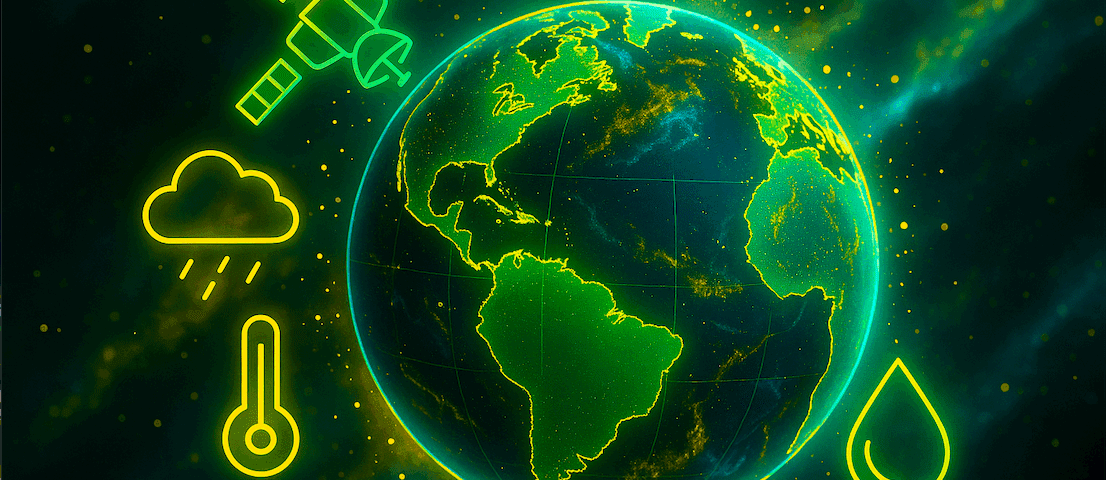
Countries design satellites to monitor the climate with precision.
While climate change remains a central topic of global debate, two strategic initiatives — still little known to most Brazilians—are progressing in the space and environmental arenas.
Brazil is taking part in the development of a multilateral climate-monitoring satellite with fellow BRICS countries, and has also signed on to another satellite project with China, detailed below.
What will the BRICS climate monitoring satellite look like?
Scheduled for launch in 2027, the satellite developed jointly by Brazil, China and India will be among the highlights of the BRICS Heads of State Summit, which will take place on July 6 and 7, 2025 in Rio de Janeiro.
The goal is to establish a multilateral platform for real-time climate monitoring focused on global challenges such as deforestation, water scarcity and greenhouse gas emissions.
The initiative marks a step forward for South-South cooperation, strengthening the environmental sovereignty of participating countries and broadening access to reliable climate data.
Main functions:
- Monitoring deforestation and forest fires, with a focus on the Amazon.
- Monitoring freshwater reservoirs, such as the Guarani Aquifer.
- Measuring methane emissions in agricultural regions.
- Tracking Himalayan glaciers and Asian monsoon patterns.
- Sharing data in real time via a joint BRICS digital platform.
Division of technical responsibilities
The satellite will be developed collaboratively, integrating cutting-edge technologies from the three countries:
- China: responsible for the platform and propulsion systems, with technology derived from the Gaofen satellites.
- Brazil: through its National Institute for Space Research (INPE), it will create specific sensors for monitoring the Amazon, fires and tropical biomes.
- India: through its space agency ISRO, it will design instruments for analysing monsoons and tracking Himalayan glaciers.
All the information generated will be shared among the member countries, contributing to early warnings, rapid responses to climate disasters and the formulation of public policies based on scientific evidence.
CBERS-5: Brazil and China strengthen space cooperation
In addition to the BRICS Satellite, Brazil is also moving forward with another important space mission: the development of CBERS-5 (China-Brazil Earth Resources Satellite-5), which will operate in the areas of agriculture, civil defence and natural disasters.
Scheduled to be launched in 2030, CBERS-5 will be the first in the series to operate in geostationary orbit, allowing continuous monitoring of the same region, with the main focus on Brazilian territory.
The mission promises to revolutionise the monitoring of agricultural areas, the forecasting of droughts, fires and floods and support for civil defence through real-time images, providing data so that the Brazilian government can take proactive measures.
The Brazil-China partnership in the area of space has been in place for 35 years and is considered one of the longest-lasting and most strategic in the Global South. According to Luciana Santos, Minister of Science, Technology and Innovation, Brazil is committed to robust investment in the national space programme, in collaboration with China. “We want to renew this partnership and fulfil the expectations of our presidents”, she said.
The chief engineer of the China National Space Administration (CNSA), Li Guoping, emphasised the symbolic nature of the mission:
“CBERS-5 represents more than technology – it is a symbol of the mutual trust and shared vision between our countries.”
Why this matters for Brazil?
Home to the planet’s greatest biodiversity and the world’s largest tropical forest, Brazil relies on effective monitoring systems to safeguard its resources and support global climate stability. These initiatives will make it possible to:
- Strengthen Brazil’s actions in the face of climate change.
- Provide strategic data for environmental public policies.
- Improve Brazil’s international image in terms of sustainability.
- Consolidate Brazil’s leading role in the global climate agenda.
A future of cooperation and sustainability
Brazil’s involvement in projects such as the BRICS climate satellite and CBERS-5 goes beyond science: it represents technological sovereignty, green diplomacy and long-term strategy.
While these missions are progressing away from the spotlight of the mainstream media, it is essential that society, the press, universities and environmental movements follow the progress of these important projects.
Climate has no borders
The BRICS Climate Satellite and CBERS-5 represent major steps by Brazil towards technological and responsible environmental action, based on data and cooperation with other emerging powers.
The future of the climate is being monitored in real time and Brazil is at the centre of the orbit. Cooperation between emerging countries will be decisive in guaranteeing the sustainability of life on the planet.