


BRICS makes progress on its own payment system
9 de July de 2025
BRICS Business Forum: new horizons and opportunities for the Global South
13 de July de 2025
Countries like the US sabotage themselves by applying sanctions that ultimately strengthen the bloc they seek to contain.
In recent decades, economic sanctions have been one of the main instruments of geopolitical pressure used by the United States, the European Union (EU) and their allies. This tool has been used with the promise of promoting political change, curbing abuses or isolating regimes considered to be “threats”. But what was seen as an instrument of power has turned into a boomerang: sanctioning countries face the side effects of a system that is turning against them.
Below are 10 critical mistakes made by sanctioning countries — and how they undermine governance and speed the rise of a multipolar financial system.
1. Banalizing sanctions
It is estimated that more than 30% of the world’s population lives under some kind of direct or indirect sanction imposed by the US or the European Union. According to an article in the Washington Post, the US now applies three times more sanctions than any other country or international entity, affecting roughly one third of the world’s nations. Overusing sanctions drains their impact and causes diplomatic fatigue even among allies.
2. Confiscating sovereign reserves: the breaking point
The freezing of $300 billion in Russian reserves in 2022 along with assets in Afghanistan and Venezuela sent a clear message: no dollar reserve is entirely safe. That precedent eroded decades of confidence in the dollar as a neutral asset undermining its hegemony.
3. Cutting countries off from SWIFT
Russia’s exclusion from the SWIFT system (Society for Worldwide Interbank Financial Telecommunication) — a global messaging network for more than 11,000 financial institutions in over 200 countries — was a radical and unprecedented move.
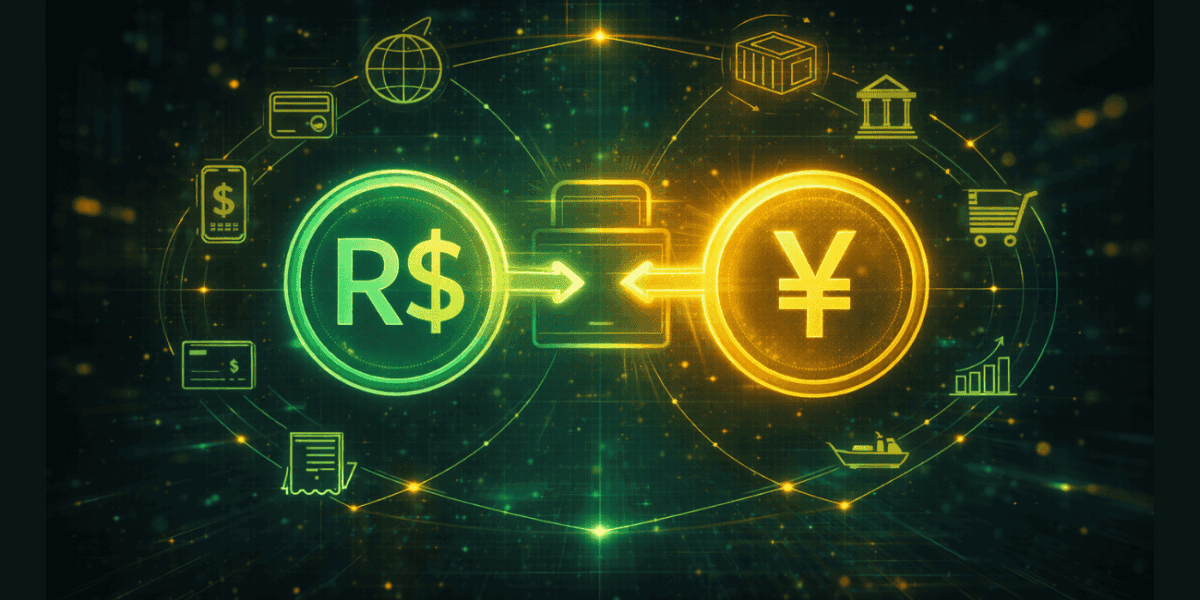
Yet it also spurred the BRICS+ countries to develop alternative payment systems to enable cross‑border transactions in local currencies. As a result the world now has alternatives like:
- CIPS (Cross‑Border Interbank Payment System) — China’s yuan‑based international payment platform
- SPFS (System for Transfer of Financial Messages) — the Russian central bank’s SWIFT equivalent developed in response to Western sanctions, first launched after 2014 and expanded in 2022
- BRICS Pay (BRICS Integrated Payment System) — a multilateral payment initiative by BRICS+ to allow direct currency transactions among member countries reducing reliance on the dollar.
4. Punishing allies
Secondary sanctions are measures that punish third parties for maintaining trade relations with nations already sanctioned by the West. In other words: it’s not enough to hit the “target” directly – the US and the EU are now also threatening their own partners who insist on maintaining economic ties with these countries.
The result is a side effect with a rebound effect: important allies such as Brazil, India, Turkey and the United Arab Emirates have begun to adopt positions of greater geopolitical and financial autonomy, moving away from automatic alignment with Washington or Brussels.
Many began trading in local currencies – including in sensitive sectors such as oil – to reduce exposure to the dollar and protect their national interests. By pressuring allies as if they were adversaries, the West weakens its own network of influence, accelerates global de-dollarization and fuels the advance of the new multipolar financial architecture – precisely the scenario it sought to avoid.
5. Underestimating the resilience of sanctioned countries
Sanctions often underestimate the adaptability of countries rich in strategic resources, such as Russia and Iran, which have reoriented exports towards partners like China and India, strengthened alternative chains and are investing in local production to reduce Western dependence.
In the case of Venezuela, despite efforts to diversify partners and minimize impacts, the country faces severe economic challenges, internal crises and a limited capacity for prolonged resistance to sanctions. Nevertheless, even with difficulties, the Venezuelan government has sought alternative paths, showing that the expectation of immediate collapse was exaggerated.
6. Not foreseeing unlikely alliances
By sanctioning multiple countries simultaneously, the West ended up encouraging a rapprochement between historical rivals such as Iran and Saudi Arabia – now united by strategic interests within the BRICS+. After the BRICS Summit in Rio de Janeiro in July 2025, this convergence gained new momentum, with pragmatic commitments in areas such as energy and trade.
Although still in its early stages, this cooperation represents a concrete sign that old rivalries are being overcome by common geoeconomic objectives. The result is a new axis of power that directly challenges the unipolar order led by the West – an unintended but decisive consequence of the sanctions policy itself.
7. Breaking trust in Western institutions
The unilateral sanctions applied by the US and the European Union, often without the endorsement of the UN Security Council, have eroded the legitimacy of the international institutions created in the aftermath of the Second World War. The UN and the WTO (World Trade Organization), pillars of the multilateral system, face growing global discredit as they are systematically ignored in crucial geoeconomic decisions.
This breakdown in trust is opening up space for alternative blocs such as BRICS+, the EAEU (Eurasian Economic Union, led by Russia) and the SCO (Shanghai Cooperation Organization). Although less consolidated, these groups are gaining strength because they offer governance that is more aligned with regional interests – and because they represent a direct counterpoint to the Western hegemony that today seems disconnected from the realities of the Global South.
8. Unwittingly promoting the rise of local currencies
The sanctions that limit the use of the dollar and the euro are driving bilateral agreements in local currencies such as the yuan (China), the rupee (India), the rial (Iran), the dirham (UAE), the real (Brazil) and the rand (South Africa). Data from the International Monetary Fund (IMF) shows that in the first quarter of 2024, the dollar’s share of official foreign exchange reserves fell to 54.8%, down from 58.9% in 2001 – a drop that illustrates the gradual erosion of US hegemony.
China and Russia clearly exemplify this trend: in 2023, around 90% of their trade was settled in yuan and ruble, following Western sanctions. The yuan’s momentum was reinforced in 2025 by a series of currency swaps and the expansion of the CIPS system in more than 30 countries.
This trend is gaining momentum within the BRICS+, signaling that confidence in the dollar as a neutral asset is being eroded, making room for a more multipolar and resilient financial system.
9. Ignoring disruptive technologies: the sanctioned countries’ response
Sanctioned countries are investing heavily in sovereign digital currencies (CBDCs), blockchain for foreign trade and regional development banks. China leads the way with e-CNY, while Brazil is making headway with Drex. The IMF warns of a possible “global monetary fragmentation”, which could further weaken the traditional financial system dominated by the West.
10. Causing humanitarian crises and the risk of war crimes
Sanctions punish governments, but mainly affect vulnerable populations, causing social suffering and humanitarian crises, as well as shortages of food, medicine and fuel.
In the Global South, leaders from countries such as Brazil, South Africa and India denounce unilateral sanctions that block humanitarian assistance and could constitute a war crime for violating fundamental rights. This reality undermines the “moral legitimacy” of the West, which imposes such sanctions.
When innocent civilians pay the price for geopolitical decisions, the narrative of defending “human rights” fades – and the West loses support, credibility and influence, especially among the countries of the Global South.
Conclusion: checkmate for the unipolar order
Instead of merely punishing adversaries, sanctions weaken the very system that sustains them. By abusing the dollar as a weapon, sanctioning countries devalue global confidence in their currency and encourage the construction of a more resilient, decentralized and diverse multipolar order.
Trust is the true foundation of a global currency. When that trust is broken by unilateral decisions, the cost doesn’t just fall on those sanctioned – but on the entire system.