


Brazil experiences historic expansion in infrastructure and logistics
19 de August de 2025
Instituto CPFL launches documentary series on Brazil and China
29 de August de 2025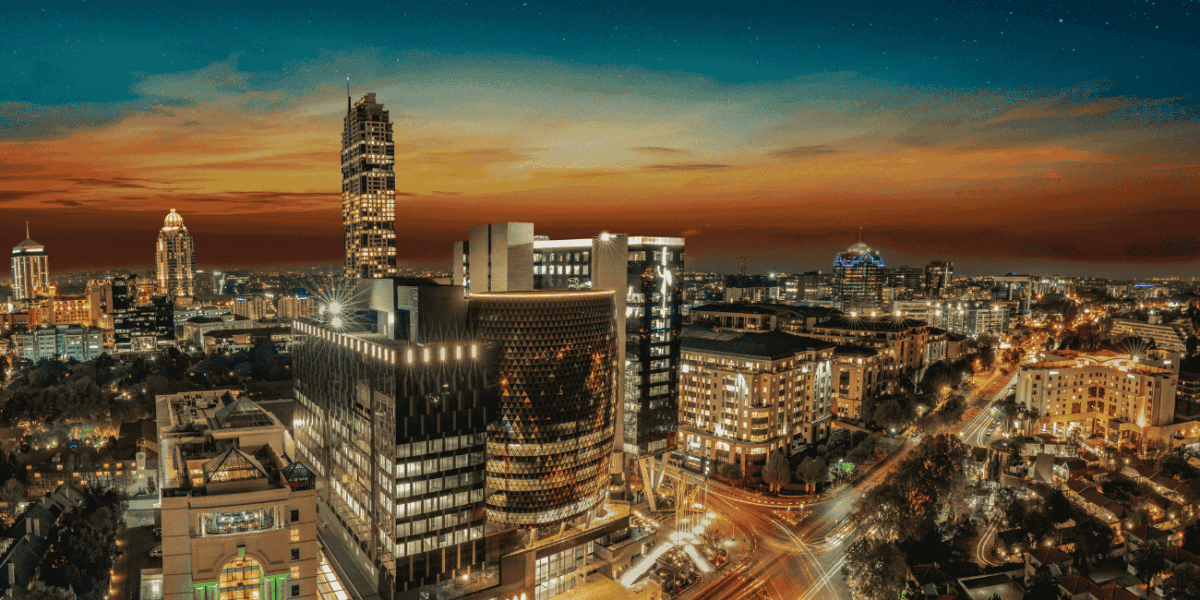
What the mainstream media ignores and doesn’t want you to know about Africa’s progress.
I have never accepted the deafening silence and biased coverage Africa receives in the global economic news. The interests sustaining this smokescreen are shadowy and powerful — but the truth is far too compelling to remain hidden.
- Why are we kept in ignorance about the continent’s economic expansion?
- Why are we constantly sold the fossilized “Third World” narrative, focused only on crisis and misery?
- What lies behind this filtering — known in journalism as gatekeeping — that deprives us of impressive economic truths about Africa?
While Western media often insists on a reductionist view centered on challenges, poverty and conflict (which exist, as everywhere), the greater truth is that an extraordinary economic transformation is unfolding before our blinded eyes.
With a young population, strategic resources coveted worldwide (which explain coups, conflicts and wars) and growing integration in the Global South (including BRICS+), Africa does not ask for permission: it is already rewriting its economic story. Get ready to dismantle outdated paradigms and update your vision of Africa.
1. The future is young and African: 1 billion youth by 2050
Africa has the youngest population on the planet (!) with a median age of 19.7 years according to 2025 World Bank data. By 2050, it will host 25% of the global labor force, meaning 1 in every 4 young people in the world will be African. This demographic boom is an unmatched economic driver, attracting massive investment in education, technology and consumer industries.
2. Growth far above the global average
While advanced economies stagnate, Africa shows resilience and strength. The IMF projects 4% growth for Sub-Saharan Africa in 2025, above the global average of 3%. Powerhouses like Ethiopia (6.6%), Côte d’Ivoire (6.5–6.8%) and Rwanda (7%) lead this race with bold reforms, booming infrastructure and expanding consumer markets.
Author’s note: I still notice prejudice and sarcasm in Brazilian and global financial circles whenever Ethiopia is mentioned as a BRICS+ partner. We must dismantle them: the racist stigma that Ethiopia is a “miserable” country is outdated, stuck in the crises of the 1980s.
Times have changed. Today Ethiopia grows 6.6% (IMF) to 7.2% (African Development Bank) annually, leads African coffee production (US$1.2 billion in exports in 2024), and is advancing toward wheat self-sufficiency. The Grand Ethiopian Renaissance Dam (6,450 MW) consolidates its renewable energy leadership and Addis Ababa, seat of the African Union, is a global hub. With 100,000 STEM graduates per year and Ethiopian Airlines connecting 40 African countries, Ethiopia dismantles colonial and neocolonial stereotypes, projecting a GDP of US$6.2 trillion by 2075.
3. Global agricultural potential
Africa holds about 60% of the world’s uncultivated arable land, signaling enormous agricultural potential. With modern techniques and investments in irrigation, storage and logistics, the continent will be able to ensure food security and become a global breadbasket. According to the African Development Bank, Africa’s agricultural market is expected to reach US$1 trillion by 2030.
In this context, Africa has attracted massive investments from strategic partners such as Russia (since the Soviet era in energy and agriculture) and China (via the Belt and Road Initiative since 2000). These investments have significantly strengthened the continent’s productive capacity.
It is worth highlighting that Brazil – through Embrapa – has also deepened its ties with Africa. The climatic and geological similarities (a legacy of the ancient supercontinent Gondwana) facilitate cooperation in seeds, agricultural technology and climate adaptation.
4. Leader in renewable energy
Africa is a green energy powerhouse, with about 39% of global solar potential thanks to its vast high-irradiation areas, according to IRENA (International Renewable Energy Agency). The continent is driving innovation with large-scale projects in solar, wind, geothermal and hydro power.
Examples include Kenya’s Lake Turkana Wind Power Project, Egypt’s Benban Solar Park and Morocco’s Noor solar complex, all of which attract major global investment and consolidate the region as a hub in the global energy transition.
5. African Continental Free Trade Area
The ongoing implementation of the African Continental Free Trade Area (AfCFTA) is one of the most transformative economic projects today. By integrating 54 countries and a market of 1.4 billion people, with a combined GDP of US$3.4 trillion, the agreement has the potential to boost intra-African trade by 52%, according to the UN Economic Commission for Africa (UNECA), creating regional value chains and reducing Africa’s historical dependence on external markets.
Africa is leading a digital financial revolution, transforming lives through innovative financial services. With around 900 million mobile lines in 2025 (GSMA), platforms such as M-Pesa in Kenya and Flutterwave in Nigeria enable payments and transfers via mobile phones. Digital financial transactions in Sub-Saharan Africa are expected to surpass US$1.2 trillion in 2025, creating an accessible model that connects communities to the global market.
Cities like Lagos, Nairobi, Cape Town and Kigali attract billions in venture capital investments, consolidating the region as a hub of innovation.
6. Boom in digital economy and innovation
Africa is at the forefront of a digital financial revolution, transforming lives through innovative fintech solutions. With roughly 900 million mobile subscriptions by 2025 (GSMA), platforms such as Kenya’s M-Pesa and Nigeria’s Flutterwave enable payments and transfers directly via phone. Digital financial transactions in Sub-Saharan Africa are set to surpass $1.2 trillion in 2025, fostering an inclusive model that connects communities to the global marketplace.
Cities like Lagos, Nairobi, Cape Town and Kigali are attracting billions in investment, establishing the region as an innovation hub.
7. Integration into BRICS+ and the Global South
The expansion of BRICS+, with Egypt and Ethiopia joining the already established South Africa, marked a strategic geoeconomic advance. This underscores Africa’s growing role in a multipolar world, driving trade in local currencies, boosting infrastructure projects (such as Ethiopian railways and Egypt’s Suez Canal initiatives) and strengthening technical cooperation in energy and agriculture.
8. Mineral reserves: key to the energy transition
Africa is a mineral powerhouse, critical for the green and technological future, holding around 30% of global mineral reserves. According to the United States Geological Survey (USGS) and World Bank, the continent dominates global supply chains with roughly 70% of cobalt (essential for electric vehicle batteries), 50% of manganese (crucial for renewable energy), 90% of platinum (vital for hydrogen technologies) and 46% of diamonds – not to mention its vast gold reserves.
This geological wealth positions Africa as a central player in the global energy transition, attracting investment, fostering sustainable innovation and strengthening its influence in a world increasingly reliant on clean technologies.
9. Rising capital markets
African financial markets are gaining global recognition. The Johannesburg Stock Exchange (JSE) ranks among the world’s top 20. Meanwhile, the Nigerian Exchange (NGX) has emerged as one of the strongest performers globally in 2024–25, with gains exceeding 35% in a single year, demonstrating investor confidence in the continent’s real economic growth.
10. Brazilian companies expand in Africa
Brazilian firms are driving economic growth in Africa, leveraging synergies that make the continent a priority for investment, innovation and mutual development.
Notable examples include:
- Petrobras, a global leader in deepwater exploration, expands operations in Angola, Nigeria, Namibia and Ivory Coast, applying its pre-salt expertise to make Africa its main exploration region outside Brazil.
- Vale, the mining giant, operates in Mozambique (coal) and Guinea (iron ore) and is one of the continent’s largest investors.
- Embraer supplies aircraft and technical support in Angola (Super Tucano jets), Ghana (Super Tucano negotiations) and
- South Africa (E195-E2 jets for Airlink and C-390 negotiations). A potential assembly center in Tunisia is under discussion.
- WEG runs a factory in South Africa and offices in Nigeria and Morocco, serving the energy and mining sectors.
- Stefanini leads in IT, with offices across South Africa, Angola, Nigeria, Morocco and Egypt.
Update
On August 25, 2025, Brazil and Nigeria signed several agreements and memoranda of understanding to strengthen bilateral diplomatic and commercial ties across various sectors during the state visit of Nigerian President Bola Tinubu. President Lula hailed the meeting as “Brazil’s return to Africa.” Nigeria, the continent’s most populous nation and one of its largest economies, marks a key partner in this renewed engagement. Learn more here.
Conclusion: Africa is a giant
As shown, the narrative that Africa is a stagnant continent is a convenient falsehood that must be challenged. In reality, the African continent is vibrant, innovative, youthful and strategically positioned for the future.
Several movements symbolize this renaissance, proving that the continent will no longer accept being underestimated:
-
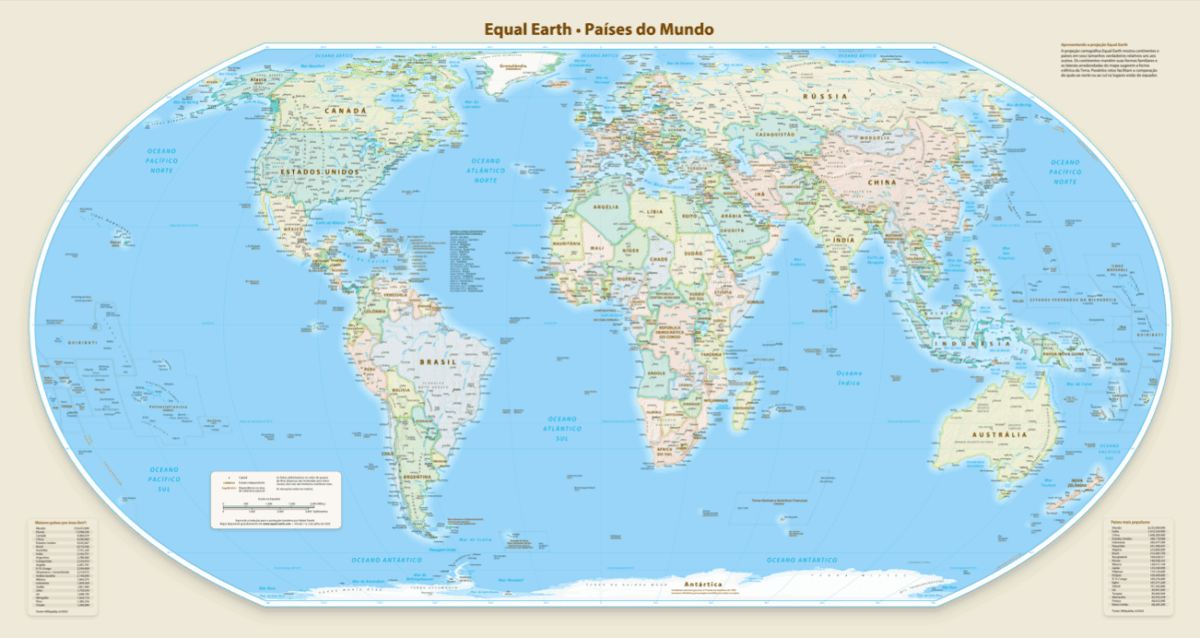
Correct the Map, movement which exposes distortions created centuries ago by Gerardus Mercator’s map, still used in schools, that reduce Africa’s true scale.
-
Pan-africanism, movement uniting African peoples and their descendants worldwide, promoting political, economic and cultural integration as outlined in the African Union’s Agenda 2063 (“One Africa”).
-
Africans Rising, a pan-African coalition strengthening unity and collective action for justice, peace and dignity.
Ultimately, Africa positions itself as a giant, creative and strategic continent, embracing its role as a global protagonist in the 21st century with courage, power and confidence – a future impossible to ignore!