



13 remarkable facts about India in 2026
22 de February de 2026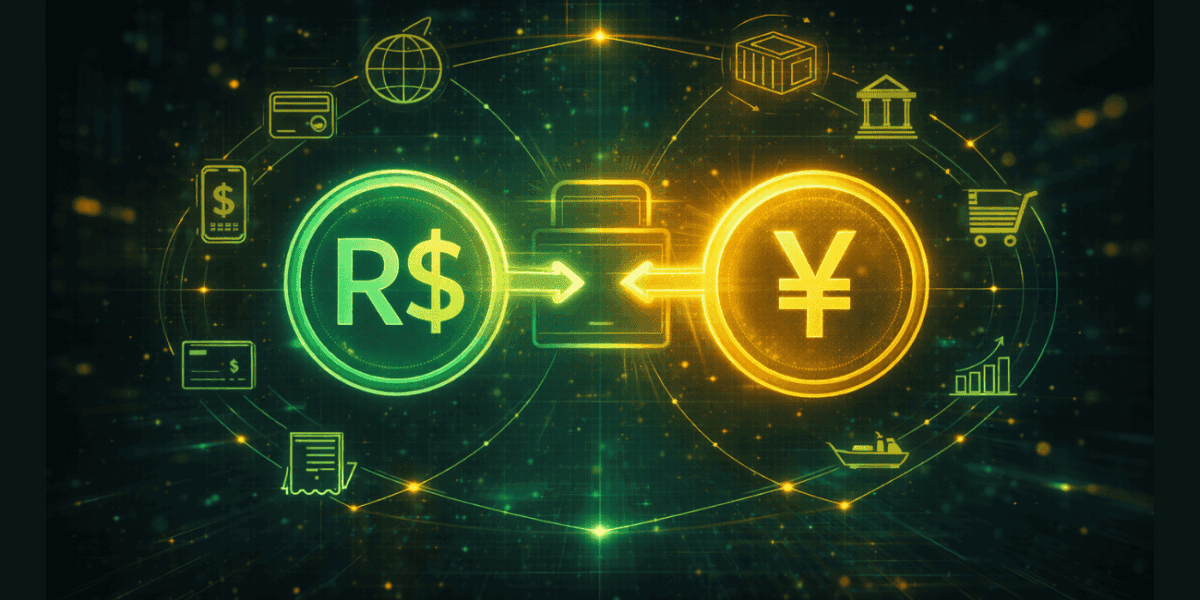
Q&A guide: learn how Brazilian and Chinese companies cut costs, simplify cross-border trade and gain efficiency in bilateral commerce.
In recent years, Brazil and China have deepened their strategy of settling bilateral trade in their own currencies — the real and the yuan. This FAQ brings together key questions and answers to help readers better understand this emerging market trend.
Key context
- China remains Brazil’s top trading partner for the 17th consecutive year.
- Historic record: bilateral trade flows reached US$ 171 billion — more than double the volume traded with the United States (US$ 83 billion).
- Strong partnership: in 2025, Brazilian exports to China reached US$ 100 billion, the second-highest figure in the historical series.
- Trade relevance: China accounts for 28.7% of Brazilian exports and 25.3% of Brazilian imports.
1. How does payment in local currency work?
In practical terms, imagine a Brazilian exporter selling soybeans to China and receiving payment in reais, deposited in Brazil. The Chinese importer pays in yuan, in China. The conversion between the two currencies is based on the direct real/yuan exchange rate, and the central banks guarantee final settlement. The US dollar does not feature in the transaction.
2. How did it work before the local currency agreement?
Before the agreement allowing the use of the real and the yuan in international trade, the dollar was mandatory in all bilateral transactions. The transaction chain was longer and generated additional costs:
- The Chinese importer converted yuan into dollars and paid a fee.
- The dollars were transferred to Brazil.
- The Brazilian exporter converted dollars into reais and paid another fee.
The result: two conversions, two sets of fees and exposure to dollar exchange rate volatility. That model has been replaced by a system in which conversion is direct, from yuan to real, eliminating costs and an unnecessary detour.
3. Is the dollar still used in trade between Brazil and China?
Yes. The dollar remains an option and is still widely used. The difference is that it is no longer mandatory. Companies can now choose between two paths: the traditional route using the dollar or the direct real-yuan route, which removes one conversion and reduces costs. It is a matter of choice, not abrupt replacement.
4. How are products priced? In real, yuan or dollar?
Product prices are typically still negotiated in dollars. What changes is the method of payment.
In practice:
- The purchase and sale contract is generally denominated in dollars, as it remains the global benchmark for commodities such as soybeans and oil.
- At the time of payment, the Chinese importer pays in yuan and the Brazilian exporter receives reais directly into their account, without having to convert dollars into reais.
- Example: a US$ 100,000 contract is signed in dollars. On the due date, the bank performs a direct conversion from yuan into reais and the exporter receives payment in Brazilian currency.
- The dollar serves as a unit of account rather than a means of payment.
5. What is the difference between yuan and renminbi?
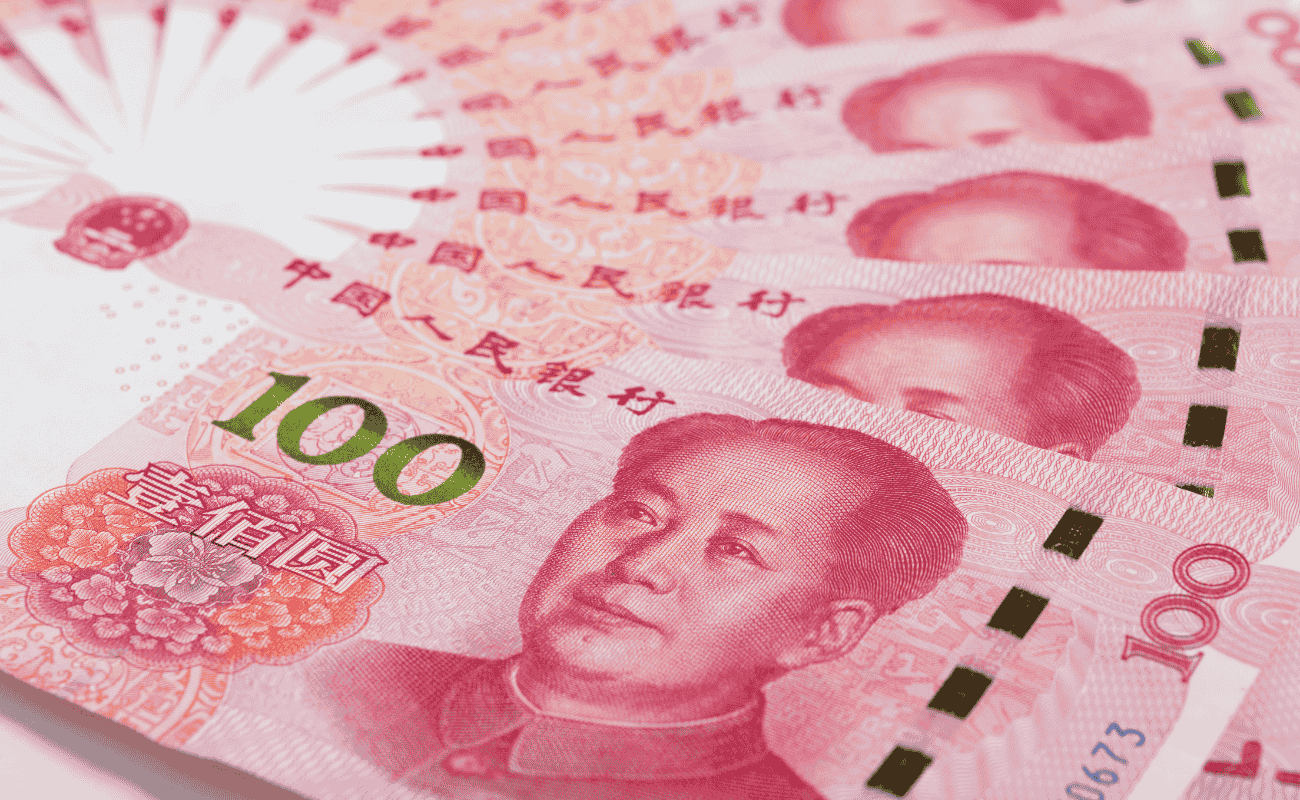
Renminbi is the official name of China’s currency. Yuan is the unit of that currency and also the term commonly used in daily life and in financial markets.
A practical comparison helps: in the United States, the currency is called the US dollar and the unit is the dollar. Similarly, in China the currency is the renminbi, abbreviated RMB, and the unit is the yuan, abbreviated CNY. In Brazil, this distinction can be confusing because the word real refers both to the name of the currency and to its unit.
6. What is “currency convertibility” and why does it matter?
Convertibility refers to how easily a currency is accepted and exchanged outside its country of origin. It is common to hear that the yuan is “not convertible” as if that were a flaw, yet the real is not fully convertible either.
- A fully convertible currency, such as the dollar or the euro, is accepted worldwide without bureaucratic barriers.
- A currency with restricted convertibility, such as the real, the yuan or the Argentine peso, is fully usable domestically but faces restrictions abroad. For example, exchanging reais for dollars is subject to limits and central bank regulations.
Convertibility is not a binary condition. It exists on a spectrum, and both Brazil and China fall into the same category.
7. Is the yuan convertible? And the real?
Both have restricted convertibility. This is a matter of economic policy, not a structural flaw. Brazil and China manage capital flows to prevent speculation and currency crises. Were their currencies fully convertible, they would be more vulnerable to speculative attacks.
In short, when someone says the yuan is not convertible, it is worth remembering that the real is not either. This does not hinder bilateral trade because the agreement created a dedicated corridor where global convertibility is unnecessary. What matters is settlement between the central banks.
8. If the yuan and the real are not fully convertible, how does trade work?
The agreement established an exclusive corridor for transactions between the two countries. It works in both directions:
- When China buys from Brazil, the Chinese importer pays in yuan and the Brazilian exporter receives reais.
- When Brazil buys from China, the Brazilian importer pays in reais and the Chinese exporter receives yuan.
In both cases, funds circulate without passing through the dollar. The central banks handle bilateral settlement behind the scenes using the direct real/yuan exchange rate.
Global convertibility is unnecessary because the currencies only need to be accepted within this corridor, which was designed precisely for that purpose. To ensure liquidity within it, a safeguard mechanism is in place: the currency swap.
9. What is the currency swap?
It is a protection mechanism between the two central banks and functions as a shared reserve.
- If there is a shortage of reais in China to pay Brazilian exporters, the Central Bank of Brazil supplies reais.
- If there is a shortage of yuan in Brazil to pay Chinese exporters, the People’s Bank of China supplies yuan.
This is not a traditional debt instrument. It is a temporary exchange of currencies designed to ensure that trade does not stall for lack of liquidity.
In practice, the two countries make available R$ 157 billion, equivalent to 190 billion yuan. This is the foundation that underpins stability in the exclusive real-yuan corridor.
10. Who benefits? Does the consumer notice?
Companies, governments and consumers all stand to benefit.
✅ Companies pay lower fees. Market estimates suggest savings of between 1% and 5% in financial costs by eliminating the double conversion via the dollar. A concrete example is Chilli Beans, the Brazilian eyewear group with annual revenue of R$ 1.4 billion. The company has begun paying all Chinese suppliers directly in yuan.
“We will no longer use the dollar in our business with China. The idea is that the dollar should never return. We identified an opportunity to reduce import costs and, consequently, prevent products from reaching consumers at higher prices.”
Caito Maia – CEO of Chilli Beans

✅ Governments reduce dependence on the dollar and gain greater autonomy in bilateral negotiations.
✅ Consumers feel the effects over the medium term. With fewer transaction costs, fewer intermediaries and greater exchange rate predictability, prices of imported Chinese products such as electronics, toys and clothing, as well as Brazilian exports such as soybeans, meat and coffee, tend to become more stable. Faster settlement, on a D+1 basis via China’s Cross-Border Interbank Payment System, also lowers operational costs that could otherwise be passed on to final prices.
11. Who can use the local currency agreement with China?
Any Brazilian company that exports to or imports from China may opt for this model. It is sufficient to request that its bank settle the transaction in local currency. No special authorization or bank account in China is required.
12. How does it work in practice? Does the exporter or importer need anything special?
No. The exporter or importer simply informs their commercial bank, such as Banco do Brasil, Itaú Unibanco or Banco Santander, that they wish to settle the transaction in local currency. The bank manages the entire process, including direct yuan/real conversion.
13. Is there a per-company limit to use the currency swap?
The R$ 157 billion swap is the overall ceiling of the agreement between the two countries, a system-wide liquidity backstop. There is no fixed cap per company. Each commercial transaction can proceed normally, provided it complies with Brazilian foreign exchange regulations.
14. Does Brazil have official local currency agreements with other countries?
Yes. Since 2008, Brazil has maintained the Local Currency Payment System with Argentina, Uruguay and Paraguay within the framework of Mercosur.
In practice, it works in both directions:
- If the Brazilian company is the exporter, it receives reais and the importer pays in their local currency.
- If the Brazilian company is the importer, it pays in reais and the exporter receives in their local currency
- Conversion is handled centrally by the central banks, with no dollar involved.
Important: the system applies only to trade transactions, imports and exports, not to investments or financial remittances without a trade basis.
15. What is the difference between the agreement with China and Mercosur’s system?
The key difference is that the agreement with China includes a R$ 157 billion currency swap, a form of insurance between central banks that guarantees liquidity in times of stress. Mercosur’s system is strictly a payment mechanism. It processes local currency transactions but does not include this backstop.
In summary:
- Agreement with China: payment system plus swap backstop.
- Mercosur system: payment system only.
This is why the agreement with China has greater robustness and scale. In addition to facilitating transactions, it is supported by a multibillion reserve designed to prevent trade from stalling due to a shortage of currency.
16. Does Brazil have local currency agreements with other BRICS countries?
With other BRICS members, there are no formal bilateral agreements equivalent to the swap arrangement with China. Negotiations among central banks are ongoing, alongside the development of BRICS Pay, a collective platform being tested to integrate the bloc’s payment systems. A consumer version is already operating in Russia, while a foreign trade version is under development and expected to be operational by 2030.
See also
- “We will no longer use the dollar in our business with China,” says the CEO of Chilli Beans (Portuguese only)