



Digital Real: everything you need to know about DREX
2 de July de 2025
Historic event: BRICS Business Forum takes place this Saturday
4 de July de 2025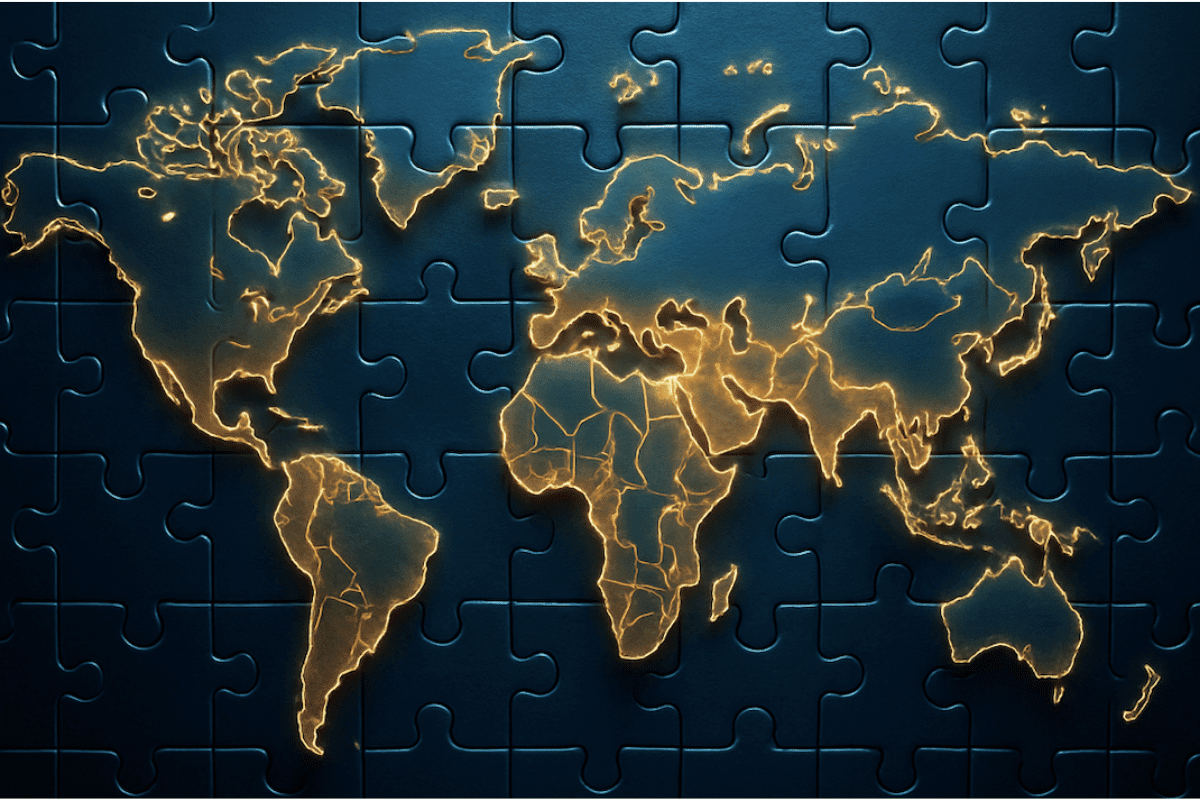
Everything you need to know about BRICS+, the emerging superbloc responsible for nearly 40% of global GDP.
The 21st century is witnessing the rise of a new economic superpower: BRICS+. Through strategic initiatives and growing global influence, this alliance is redefining the future of international business and cooperation.
Originally formed in 2009 as BRIC — Brazil, Russia, India, and China — and expanded in 2010 with the inclusion of South Africa, the group took a decisive leap in 2024 by welcoming new members, consolidating itself as the current BRICS+.
Today, BRICS+ represents nearly half of the world’s population, a powerful indicator of its demographic and economic influence. In this overview, we’ll explore each member country’s key strengths and strategic advantages, showing how the bloc is poised to transform the global economic landscape in the coming years.
BRICS+: each country’s winning cards
BRICS+ is far more than a geopolitical alliance — it’s a unique combination of resources, capacities, and markets that is reshaping global economics. Each member brings distinct competitive advantages, creating powerful synergies.
Let’s take a closer look at the core strengths and opportunities of the 11 current BRICS+ members within this strategic alliance, highlighting how their complementarities are shaping a resilient and innovative superbloc.
1. Brazil (Agro-energy, Bioeconomy & Sustainable Digital Infrastructure)
Key strengths:
- Global leader in renewable energy transition.
- Clean and abundant energy matrix (over 80% from renewable sources: hydro, wind, solar and biomass).
- Strategic supplier of agricultural and mineral commodities.
- World’s top exporter of soybeans, beef and coffee.
- Major player in biofuels (ethanol, biodiesel, bio-kerosene).
- It holds 98% of the world’s niobium reserves (critical for high-tech, defense, automotive and infrastructure sectors).
- Key role in global food and energy security.
- International leadership in environmental and climate agendas.
- With abundant clean energy and water resources, Brazil is attracting global investment and positioning itself as a hub for green data centers and sustainable digital infrastructure.
Opportunity:
- Position itself as the green and digital pillar of the BRICS: a provider of sustainable food, bioenergy and data — integrating food, energy and digital security.
- Expand its influence as a connecting point between the bioeconomy and the digital economy, supporting smart and green value chains.
2. Russia (Energy, Agricultural, Security & Critical Minerals)
Key strengths:
- World’s largest natural gas reserves.
- Top global exporter of fertilizers and wheat.
- Second-largest oil producer.
- Global reference in defense, space and nuclear technologies with an advanced deterrence system.
- Extensive reserves of critical minerals (including nickel, palladium, platinum, lithium and rare earth elements).
- Advanced cybersecurity capabilities.
- Strong diplomatic and military influence.
Opportunity:
- Consolidate BRICS+ as a global economic superbloc, leading dedollarization and trade in local currencies, while connecting Eurasian markets through the Eurasian Economic Union (EAEU).
- Bolster BRICS+ energy, food and technology security by providing strategic resources that reinforce the bloc’s autonomy and resilience across critical sectors like energy, defense, and innovation.
3. India (Technology & Demographics)
Key strengths:
- World’s largest exporter of IT services.
- Largest population globally, with 1.4 billion people.
- Rapidly expanding consumer market driven by urbanization, digitization and a growing middle class.
- A strong STEM education base —Science, Technology, Engineering and Mathematics — that powers innovation and startups.
- Global leader in generic pharmaceuticals and vaccine production.
Opportunity:
- Become the digital innovation hub of BRICS+, providing affordable, scalable, and inclusive technologies for emerging markets.
4. China (Manufacturing & Infrastructure)
Key strengths:
- Maior potência industrial do mundo, com cadeias produtivas altamente integradas.
- Responsável por cerca de 28% da produção industrial global (segundo dados do Banco Mundial).
- Liderança em manufatura de alta e média tecnologia.
- World’s largest manufacturing power, accounting for 28% of global industrial output.
- Leader in medium- and high-tech industries.
- Global leader in green technologies: produces 80% of solar panels, 50% of wind turbines and over 70% of lithium batteries and EVs.
- Protagonist of global infrastructure development via the Belt and Road Initiative (BRI), with projects in over 150 countries.
- Significant financial and technological capacity to support BRICS+ partners.
Opportunity:
- Be the productive and logistical engine of BRICS+.
- Act as the industrial and logistical engine of BRICS+, boosting infrastructure and sustainable industrial development across member countries.
5. South Africa (Minerals & Continental Access)
Key strengths:
- Africa’s most industrialized economy
- Leader in mining, metallurgy, agro-processing and chemicals, with advanced value chains.
- Giant in critical minerals: world’s largest producer of platinum, chromium and manganese — essential for clean technologies (e.g., batteries, catalytic converters, hydrogen production).
- African financial hub: home to the Johannesburg Stock Exchange (JSE), the largest in Africa, attracting regional investments.
- Diplomatic leadership: key player in the African Union (AU) and the Southern African Development Community (SADC), promoting regional stability and integration.
- Gateway to Africa: Access to over 50 countries through the African Continental Free Trade Area (AfCFTA), a market of 1.4 billion people.
Opportunity:
- Consolidate BRICS+ as a global economic superbloc by serving as the mineral processing and logistics hub in Africa, linking strategic resources to the AfCFTA.
- With its robust industry, diplomatic influence and access to emerging markets, it enhances the bloc’s economic integration and South-South cooperation.
6. Saudi Arabia (Oil & Energy Transition)
Key strengths:
- World’s largest oil exporter, with 17% of proven global reserves.
- Key OPEC+ player, influencing global oil supply and pricing
- Sovereign wealth fund of US$900 billion (PIF), investing in infrastructure, tech and renewable energy
- Heavy investments in green hydrogen and mega energy transition projects, like NEOM, for a low-carbon economy.
- Regional leadership: mediates in the Middle East, with influence in the Gulf Cooperation Council (GCC) and Arab League, promoting stability.
BRICS+ Status:
Saudi Arabia pursues gradual alignment with BRICS+, balancing economic interests with Western alliances.
Opportunity:
- Become BRICS+’s main financial backer of sustainable infrastructure and green transition, aligning capital, energy and innovation to shape a new low-carbon economy.
7. United Arab Emirates (Finance & Connectivity)
Key strengths:
- Global financial hub: the DIFC (Dubai International Financial Centre) is one of the main financial centres in the Middle East, with more than 4,300 registered companies, including multinational banks, fintechs and investment funds, offering an independent legal environment and internationally recognised regulatory infrastructure.
- Logistics infrastructure: the UAE operates some of the busiest and most efficient ports and airports in the world, such as Jebel Ali (the largest port in the Middle East) and Dubai airport, one of the main global hubs for cargo and passengers.
- Pioneering peaceful nuclear energy: with the Barakah Plant, the UAE is the first Arab country to operate a commercial nuclear power plant, signalling energy diversification and technological advancement.
- Economic diplomacy and strategic neutrality: it maintains good relations with the West as well as with China, Russia and African countries, acting as a geopolitical and financial bridge between different economic blocs.
Opportunity:
- Be a bridge between East and West, acting as the financial and logistical centre of BRICS+, connecting capital, markets and supply chains, making strategic projects of the bloc viable with agility and diplomatic neutrality.
8. Egypt (Logistics and Demographics)
Key strengths:
- Control of the Suez Canal, through which around 12% of global maritime trade passes. It is one of the world’s most strategic logistical corridors, connecting the Mediterranean to the Red Sea and shortening traffic between Europe and Asia.
- With its unique geographical position between Africa, Asia and Europe, Egypt has the potential to be a natural logistical link between the continents, integrating trade routes and global supply chains.
- The largest Arab market, with 110 million inhabitants, a young and growing population, high consumer potential and an accessible labour force.
- Egypt is a natural gas production and export hub in the Mediterranean, with growing installed capacity and regional alliances with Israel, Greece and the European Union.
Opportunity:
- Become the main logistics and energy hub of the BRICS+, connecting continents, markets and trade through infrastructure and strategic location.
9. Iran (Geopolitics & Resources)
Key strengths:
- 4th largest oil reserves and 2nd largest natural gas reserves in the world: Iran is an energy power with resources that have not yet been exploited due to sanctions imposed by the West. It has export capacity via pipelines and strategic ports in the Persian Gulf and Caspian Sea.
- Vital geostrategic position in the Middle East: located between Central Asia, the Middle East and the Indian subcontinent, Iran connects energy and trade corridors between China, Russia, India and Europe. It takes part in the International North-South Transport Route (INSTC), a complementary alternative to the Suez Canal.
- Defence industry and autonomous drones: Iran has developed its own military technological and industrial base, with an emphasis on long-range drone systems and arms production.
- Experience in operating under sanctions: Iran has alternative financial and logistical systems to the dollar and Western infrastructure, know-how that can add value to the BRICS+ ambition of reducing dependence on Western-dominated financial institutions.
Opportunity:
- Be the energy and geostrategic pillar of BRICS+, offering alternative routes, security of supply and experience in building resilient economic systems independent of the West.
10. Ethiopia (Demography & Growth)
Key strengths:
- One of the fastest growing economies in Africa: despite challenges, Ethiopia has maintained economic growth rates above the continental average over the last decade, driven by investments in infrastructure, energy and transport.
- Young and expanding population: with more than 120 million inhabitants, Ethiopia is the second most populous country in Africa, with a mostly young demographic, a key factor for future labour force and market dynamism.
- Continental air hub: Ethiopian Airlines is the largest and most connected airline in Africa, with routes in more than 60 countries, consolidating Addis Ababa as a regional logistical and diplomatic centre, including the headquarters of the African Union.
- Investment in energy infrastructure: the country is leading projects such as the Grand Ethiopian Renaissance Dam (GERD), which could transform the regional energy matrix, making Ethiopia an exporter of hydroelectric power to neighbouring countries.
- Growing political weight on the continent: home to the African Union and with a diplomatic tradition, Ethiopia can represent continental interests in multilateral forums.
Opportunity:
- Act as a strategic bridge between BRICS+ and the African continent, representing its demographic, energy and production potential with legitimacy and regional connectivity.
11. Indonesia (Halal industry, biodiversity & Asian integration)
Key strengths:
- Southeast Asia’s largest economy
- GDP of around US$1.5 trillion (2024), with growth of 5-6% per year, driven by domestic consumption, industrialisation and digitalisation (like startups such as Gojek).
- Demographic giant: 4th most populous nation (around 280 million), with a young population (average age 30), urban and 70% digitally connected.
- Leader in the halal economy: it has the largest Muslim consumer market in the world, with an emphasis on halal products and services (i.e. those that follow Islamic law), such as food, finance (such as the BRI Syariah bank) and tourism – with growing exports in a global sector projected to reach US$ 2.8 trillion by 2025.
- Strategic biodiversity: the world’s second largest tropical forest and a benchmark in the bioeconomy, Indonesia plays an active role in global climate agendas, with targets such as carbon neutrality by 2060 and a prominent role in international environmental negotiations.
- Geostrategic importance: with control of the Strait of Malacca – a route through which around 40 per cent of global maritime trade passes – Indonesia occupies a vital logistical position in Asia.
- Logistics infrastructure: the country has been expanding its transport infrastructure, such as the port of Tanjung Priok, strengthening its role as a regional hub and strategic connector between oceans and markets.
- Influential diplomacy: protagonist in ASEAN (Association of Southeast Asian Nations), which includes 10 countries, and in the G20, with a tradition of non-alignment, mediating regional stability and South-South co-operation.
Opportunity:
- Can act as a BRICS+ bridge with ASEAN (Association of Southeast Asian Nations, a market of 650 million people), connecting production chains, strategic maritime routes and the growing halal market.
- Expand the reach of BRICS+ in Asia, boosting food security, ecological transition and South-South cooperation.
BRICS+ and the power of global cooperation
In a rapidly evolving global context, BRICS+ is gaining momentum and legitimacy — a reflection of a multipolar world that values diversity, inclusion and the strength of collective cooperation.
Outdated concepts of hegemony and colonialism are giving way to a new global architecture based on dialogue, mutual respect, shared responsibility and inclusive governance.
Amid challenges and opportunities, BRICS+ signals the dawn of a new historical era — one shaped by strategic partnerships, global synergies, and the shared aspiration for a more balanced, equitable and sustainable future.