




Petrobras SAF is milestone for sustainable aviation
20 de December de 2025
Portal allows viewing federal investments in all Brazilian cities
12 de January de 2026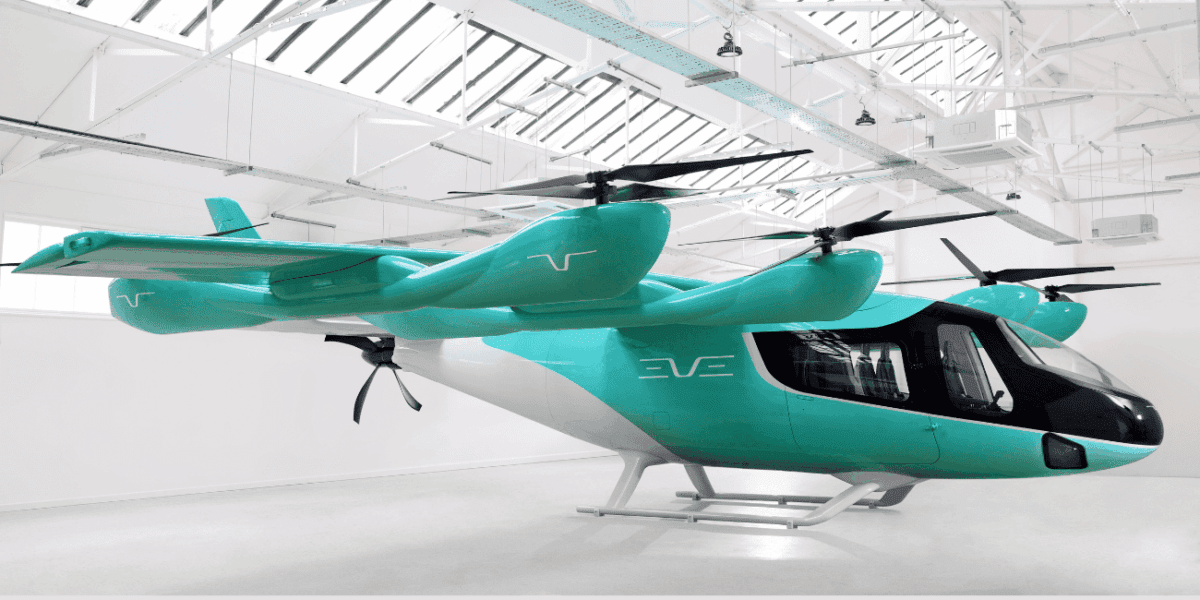
First official flight of the prototype is a milestone for Brazil. Discover 10 truths about the technology that promises to revolutionize urban mobility.
Brazil has officially entered the global eVTOL race. On December 19, 2025, Eve Air Mobility, a company of Embraer Group, successfully completed the first official flight of its full-scale eVTOL prototype — an electric vertical takeoff and landing aircraft — in Gavião Peixoto, São Paulo, one of the world’s most advanced aeronautical testing centers.
The flight represents a historic milestone for Brazil’s aerospace industry, placing the country among a select group of nations capable of developing and testing a new generation of aircraft while advancing in a structured way through the certification processes required by international aviation authorities.
This is a concrete step toward the so-called low-altitude economy, a market expected to transform mobility, industry, jobs and technology in the coming decades.
This is the key point: this is not a distant concept, but a real technology already in the testing phase, developed by a Brazilian company with global reach and long-standing experience in the aerospace industry.
✅ Truth 1: What eVTOL means
eVTOL is the acronym for Electric Vertical Takeoff and Landing. This means it:
- Does not require a runway
- Uses electric motors
- Is designed for short urban flights
✅ Truth 2: eVTOL is neither a helicopter nor a car
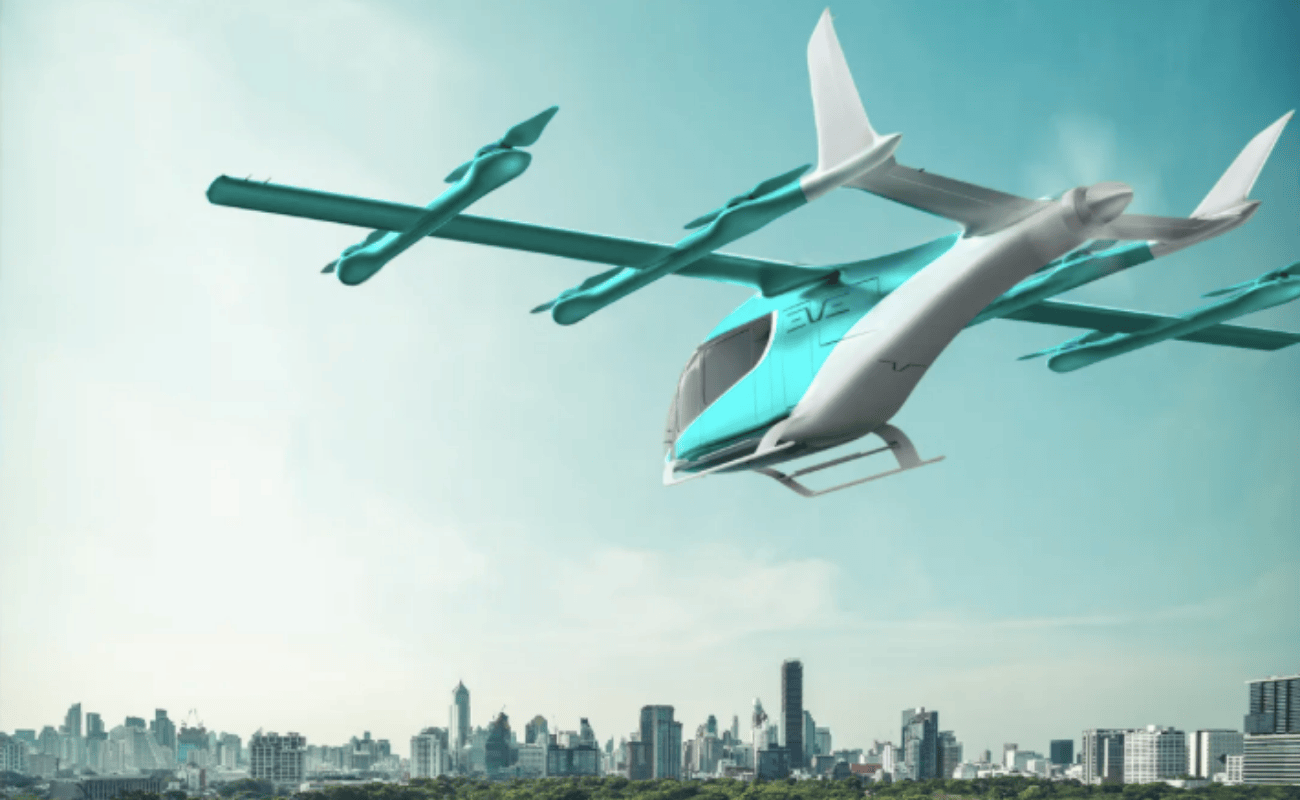
Although it takes off vertically and may look similar at first glance, an eVTOL is not an electric helicopter, but a new-generation electric aircraft.
Helicopters rely on a large central rotor and complex mechanical systems. An eVTOL, by contrast, uses multiple smaller electric motors controlled by computers, which reduces noise and increases safety. It was designed for short flights in urban environments.
Despite being popularly called a “flying car”, the term is used only to simplify understanding of the technology. Technically, these vehicles are not cars, do not operate on roads and do not follow traffic rules.
Their operation is aerial and regulated by aviation authorities. An eVTOL is an aircraft subject to strict safety rules and must be certified by authorities such as Brazil’s National Civil Aviation Agency (ANAC).
✅ Truth 3: Eve’s official flight proves the project has left the drawing board
The flight carried out by Eve was an unmanned hover flight, during which the aircraft took off vertically and remained stable in the air. In this test phase, among many others to come, the eVTOL lifted off, maintained full control in flight and landed safely.
This type of test is the first mandatory step in the development of any aircraft. It validates stability, control, motor response and the integration between software and hardware.
✅ Truth 4: Why this matters so much for Brazil
Very few countries in the world have the ability to:
- Design aircraft
- Conduct flight tests
- Engage with global regulators
- Produce at industrial scale
Brazil is one of them, thanks to Embraer. With the eVTOL program, the country positions itself not only as a user of the technology, but as a creator of a new industry with the potential to:
- Generate highly qualified jobs
- Develop domestic suppliers
- Export high value-added technology

Eve’s eVTOL prototype during its official flight
✅ Truth 5: The flight validates essential systems
Control, electric propulsion and stability are tested under real conditions. The first flight does not mean the aircraft is ready to carry passengers. It marks the beginning of a flight-test campaign that includes:
- Additional hover flights
- Transition tests from vertical to horizontal flight
- Performance, noise and energy consumption assessments
This process is lengthy because safety in aviation is non-negotiable.
✅ Truth 6: Certification is a challenge and key differentiator
Without certification, there is no commercial operation and no industrial scale.
To operate commercially, an eVTOL must be certified through a rigorous technical process that proves the aircraft is safe under all expected operating conditions.
Eve’s major advantage lies in Embraer’s experience, built over decades, in which the company:
- Has a strong track record of aircraft certification in Brazil and abroad
- Works with the world’s most demanding regulators
- Transforms prototypes into reliable products
This reduces risk and increases the program’s credibility.
✅ Truth 7: The low-altitude economy is highly promising
The low-altitude economy involves aerial operations at low altitudes using eVTOLs, drones and other aircrafts under development with electric or hybrid propulsion.
It is expected to impact sectors such as:
- Urban mobility
- Logistics
- Environmental monitoring
- Medical and emergency services
✅ Truth 8: Market entry will be gradual
eVTOLs are expected to begin operations in:
- Short routes
- Connections between airports and city centers
- High-value niche markets
Expansion will depend on infrastructure, regulation and public acceptance. In this context, Eve’s eVTOL has already accumulated letters of intent for nearly 3,000 units ahead of serial production.
✅ Truth 9: The eVTOL sector has entered a more mature phase
After years of inflated expectations, the eVTOL market has moved into a more solid phase. Today, the projects that continue to advance are those that:
- Have robust engineering
- Follow realistic timelines
- Work closely with regulators
Eve is part of this group.
✅ Truth 10: Brazil takes on a strategic role in the future aerospace sector
A new economic and technological value chain is beginning to take shape in the country. With the first eVTOL flight, Brazil strengthens its position as one of the few nations capable of developing and leading emerging aeronautical technologies.
This represents technological sovereignty, global competitiveness and a long-term vision.
Conclusion: a turning point
Eve’s eVTOL flight marks the beginning of a new chapter in Brazilian aviation and consolidates the country’s position in the global aerospace industry.
Another highly relevant aspect is that the development of eVTOLs will drive growth in other economic sectors such as:
- Battery research
- Advanced digital systems
- New air traffic management models
- Highly specialized workforce training
This is a broad transformation, not limited to a single product.
Looking ahead, Eve’s success will represent a technical, industrial and strategic achievement. The innovation has the potential to transform mobility and the national economy, enabling Brazil to commercialize high value-added technology on a global scale.