



How BRICS+ can tackle digital and agribusiness monopolies
8 de December de 2025
Eve-Embraer’s eVTOL: what you need to know
26 de December de 2025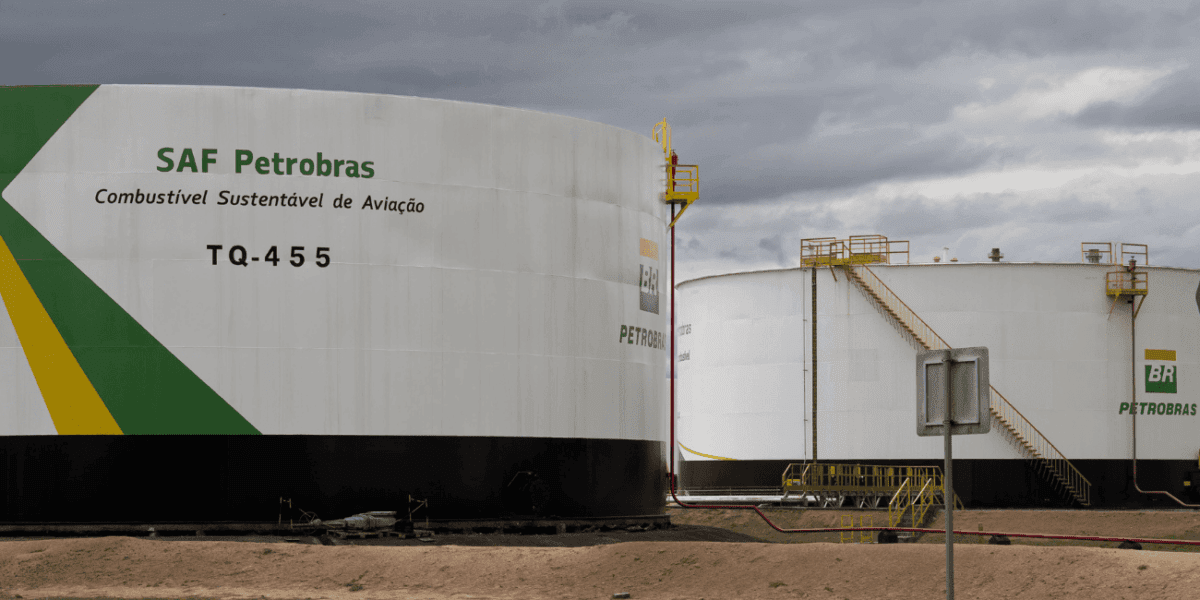
This month marked the first delivery of a 100 percent nationally produced sustainable aviation fuel with international certification.
Brazil closes 2025 with a decisive step toward the decarbonization of aviation. In early December, Petrobras announced the first production and delivery of Sustainable Aviation Fuel (SAF) fully produced in the country.
The milestone gained further relevance with the official participation of Anac (Brazil’s National Civil Aviation Agency) in the launch, reinforcing that the product meets the most rigorous international sustainability standards.
The initiative places Brazil among the countries that have taken effective steps to transform the aviation sector, one of the most complex industries when it comes to reducing greenhouse gas emissions.
What SAF is
SAF – or Sustainable Aviation Fuel – is designed to replace conventional jet fuel partially or entirely.
Its main advantage is full compatibility with aircraft and existing airport infrastructure, without the need for technical adaptations.
In practice, this allows airlines to reduce carbon emissions immediately by using a certified fuel that is internationally recognized as one of the leading solutions for decarbonizing air transport.
Fully Brazilian SAF production with international certification
Petrobras’ SAF was produced through coprocessing at the Duque de Caxias Refinery (Reduc), in Rio de Janeiro, using technical corn oil (TCO), a residual vegetable-based feedstock.
According to official data, the fuel can reduce net CO₂ emissions by up to 87 percent in the renewable portion of the product.
The Brazilian SAF received ISCC-CORSIA certification (International Sustainability and Carbon Certification – Carbon Offsetting and Reduction Scheme for International Aviation), confirming its compliance with the rules of the International Civil Aviation Organization (ICAO).
This certification is essential for the fuel to be accepted in international operations, ensuring sustainability, traceability and quality standards recognized worldwide.
Anac reinforces regulatory certainty and credibility
Anac attended the ceremony marking Petrobras’ first SAF production and delivery, highlighting the relevance of the fuel for the future of aviation in Brazil.
According to the agency, the fact that SAF is produced entirely in the country and already meets international criteria represents an important step forward for the development of the domestic market.

Photo credit: Anac and Petrobras
In this first phase, 3,000 cubic meters (m³) of SAF were produced and sold to distributors operating at Rio de Janeiro/Galeão International Airport. This volume corresponds to approximately one day of aviation fuel consumption across airports in the state of Rio de Janeiro, demonstrating the product’s operational viability.
Contribution to global decarbonization targets
The launch of SAF comes at a strategic moment for the aviation sector.
From 2027 onward, airlines will be required to comply with CORSIA, ICAO’s global program aimed at reducing emissions from international flights. In Brazil, the use of sustainable fuels is also aligned with the guidelines established by the Future Fuel Law (Lei do Combustível do Futuro).
By anticipating SAF production and certification, Petrobras offers the domestic market a solution ready to meet future regulatory requirements, reducing dependence on imports and strengthening Brazil’s energy industry.
A tangible step forward in the just energy transition
With institutional backing from Anac and compliance with international standards set by the International Civil Aviation Organization, sustainable aviation fuel moves beyond promise and becomes a tangible part of the present and future of air transport in Brazil.
This strengthens the country’s industry and energy sovereignty, opening the way for a new cycle of innovation and sustainability in the national aviation sector.
By closing the year with this major achievement, Brazil demonstrates that it is prepared to lead the global decarbonization agenda with real, certified and competitive solutions.
Source: Agência Petrobras