



Climate satellites: Brazil, China and India advance space and environmental cooperation
3 de June de 2025
NDB: How the BRICS bank contributes to the development of emerging economies
20 de June de 2025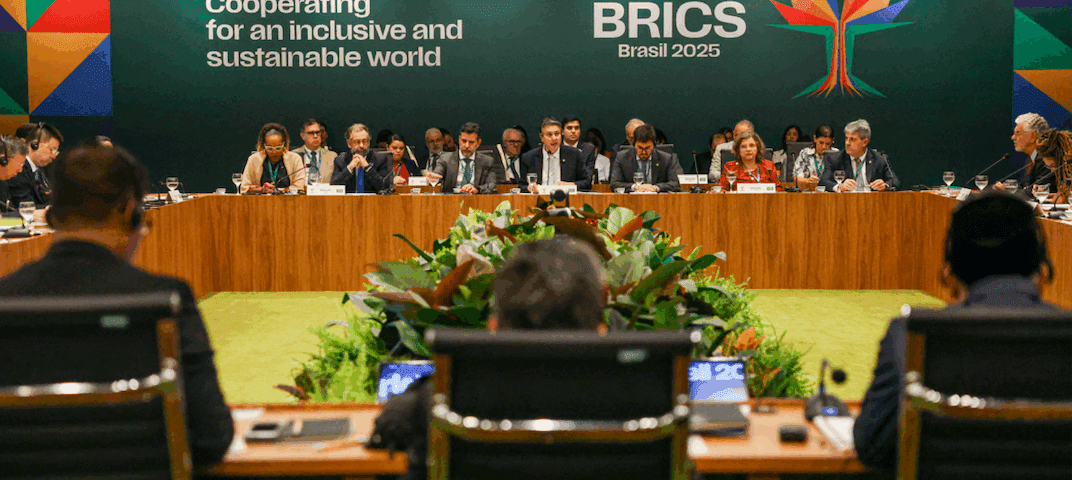
Discussions covered contemporary topics, reflecting global challenges and opportunities.
From June 3 to 5, 2025, Brazil hosted the 11th BRICS Parliamentary Forum, bringing together legislative representatives from member countries and partners.
Under the theme “Strengthening Global South cooperation for more inclusive and sustainable global governance”, the forum addressed strategic issues, reaffirming the commitment of parliaments to strengthen political dialogue, promote the exchange of best practices and build a fairer, multipolar world order.
Lawmakers from Brazil, Russia, India, China, South Africa, Saudi Arabia, Egypt, the United Arab Emirates, Ethiopia, Indonesia and Iran were present in Brasília, along with partner countries including Belarus, Bolivia, Kazakhstan, Cuba, Malaysia, Nigeria, Thailand, Uganda and Uzbekistan.
By hosting the 2025 edition, Brazil reaffirmed its leadership in promoting a more balanced international order based on sustainable development, social justice and multilateralism.
Below you can find a summary of the key topics discussed at the event.
Global governance and the Global South’s growing role
One of the forum’s central pillars was the need for deep reform in international institutions. Lawmakers strongly advocated for restructuring bodies, such as the United Nations (UN) and the global financial system, arguing that current structures are outdated and fail to reflect the Global South’s growing influence.
The demand for more equitable and representative global governance was unanimous, with BRICS positioning itself as a driving force for a multipolar architecture in international relations.
Trade, investment and finance
Strengthening intra-bloc trade was a major focus, including strategies to reduce costs and non-tariff barriers. The expansion of local currency use in BRICS trade was widely discussed as a way to reduce dependence on foreign currencies and boost the bloc’s economic autonomy.
The agenda also included promoting investment and technology transfer for sustainable development and exploring financial tools to make BRICS more resilient and future-ready.
Criticism of trade protectionism and unilateralism in economic relations was also highlighted.
Artificial Intelligence
The rise of Artificial Intelligence (AI) was a key topic, emphasizing interparliamentary cooperation for responsible and inclusive AI. Discussions focused on balancing rights protection with the promotion of female inclusion in the digital economy shaped by AI.
AI governance was one of the six priorities of Brazil’s presidency, aiming to develop regulatory frameworks that ensure ethical and beneficial use of technology for social, economic and environmental progress.
Climate crisis and sustainability
Interparliamentary dialogue on climate and sustainability played a vital role. There was strong advocacy for empowering women in the fight against climate change, recognizing their essential role in advancing sustainable solutions. Sustainability and sustainable development remained constant themes, with the forum aiming to strengthen cooperation on climate finance and push forward a robust environmental agenda.
Global health and pandemic preparedness
Global health cooperation was another key topic. BRICS lawmakers supported an agreement for joint action in future pandemics, aiming to strengthen the bloc’s crisis response capacity. Discussions included promoting sustainable and inclusive health development and ensuring equitable access to medicines, vaccines and essential medical technologies. Partnerships to eliminate socially determined and neglected diseases and investments in telehealth and digital health also received attention.
Strengthening South-South cooperation
As Brazil assumed the BRICS presidency in 2025, it reinforced its commitment to deepening South-South relations. The forum served as a platform to consolidate cooperation among Global South countries, promoting partnerships for social, economic and environmental development. The admission of new countries was seen as reinforcing the bloc’s inclusive nature, uniting diverse nations in pursuit of social justice, geopolitical balance and sustainable development.
Role of women parliamentarians in the BRICS 2025 Agenda
The BRICS Women Parliamentarians Meeting was another key moment in the event, discussing how women can act as agents of change in the era of AI and the climate crisis and contribute to shaping the BRICS agenda and future. The role of the NDB (New Development Bank) in promoting gender-sensitive financing was also highlighted.
Commitment to a new world order
The BRICS Parliamentary Forum in Brazil concluded with the approval of a joint statement that summarized priority issues and shared parliamentary visions. This document will serve as a roadmap for future actions and will be presented at the BRICS Heads of State Summit in July, reinforcing the vital role of legislatures in promoting a fairer and more inclusive global governance system for the 21st century.
More than a diplomatic gathering, the forum underscored the BRICS bloc’s growing influence in global affairs. With discussions centered on innovation, technology, sustainability and a more balanced financial system, the event demonstrated BRICS’ determination to build a future of shared prosperity and a more equitable international system.
To learn more, watch the video below and check out the full event playlist.