


BRICS Parliamentary Forum: a recap of what happened at the event
8 de June de 2025
How culture and creative economy strengthen international relations in BRICS+
28 de June de 2025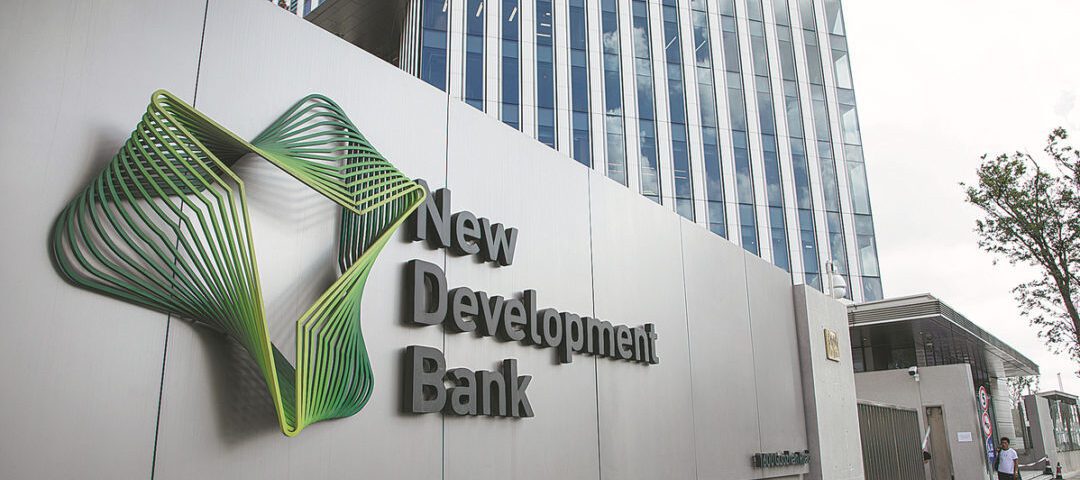
Learn how the NDB supports infrastructure and sustainability sectors across the Global South.
In an international scenario marked by geopolitical disputes, currency instability, and climate urgency, the New Development Bank (NDB), also known as the BRICS Bank, establishes itself as one of the main drivers of financing for infrastructure and sustainability in emerging countries.
Headquartered in Shanghai, China, the NDB stands out as a development institution aligned with today’s global challenges, offering credit for sectors such as infrastructure, clean energy, water and sanitation.
Founded in 2015, the bank continues to grow strongly in 2024: according to its 2024 Annual Report (released on June 12, 2025), it has already approved 96 projects, totaling US$32.8 billion in financing disbursed by the end of last year.
With a total fund of US$100 billion and US$52.7 billion already available, the NDB’s mission is to help countries in the Global South grow sustainably. It serves as an alternative to traditional institutions like the World Bank and the IMF, which often impose strict conditions that limit national policy autonomy.
Investing in infrastructure, clean energy and resilient cities
The NDB operates with well-defined goals. One of them is to allocate 40% of its resources to projects with a positive climate impact. This includes investments in solar and wind energy, modernisation of electricity grids, basic sanitation, sustainable urban transport, flood control works and modernisation of ports and railways.
In Brazil, the bank’s presence is particularly strong. According to the annual report, 31 projects have already been approved in the country, totaling US$ 5.2 billion in financing. Many of these initiatives are coordinated with Brazil’s BNDES (National Development Bank), strengthening the country’s ability to design and execute internationally funded projects.
The synergy between the NDB and national institutions has enabled the implementation of high-impact environmental and social initiatives — such as partnerships for electric urban mobility and sanitation in mid-sized cities, areas typically underserved by traditional banks.
How can a Brazilian company access financing from the NDB?
In addition to financing governments through its sovereign window (loans backed by national governments), the NDB also supports private sector projects through its non-sovereign window (direct loans to companies without requiring government guarantees).
These loans are typically aimed at large-scale infrastructure or energy projects, but medium-sized companies with robust plans can also qualify.
To apply for funding, companies must:
- Operate in sectors such as infrastructure, sustainability, innovation, connectivity, or water and energy security.
- Access the project proposal section on the NDB’s official website.
- Submit detailed documentation, including technical, financial, and environmental feasibility studies.
- Undergo a comprehensive evaluation focused on impact, risk, and governance.
- If approved, funds are disbursed in phases, with ongoing technical oversight.
In Brazil, BNDES acts as a partner, helping facilitate access. In 2024, for example, BNDES secured US$ 500 million from the NDB for electric transportation, waste management and sustainable city projects — redirecting these resources to states, municipalities, and private companies.
The dedollarization strategy
One of the most sensitive issues in global finance is the dominance of the U.S. dollar in trade and lending. The NDB is committed to a gradual dedollarization policy, aiming to carry out at least 30% of its operations in local currencies — such as the Brazilian real, the Chinese yuan, the South African rand or the Indian rupee.
This approach helps borrowing countries reduce exposure to dollar fluctuations and gives them more flexibility to use their own currencies. The NDB has already issued bonds in yuan and is developing mechanisms to offer financing in the other BRICS currencies.
In addition to being innovative, this strategy brings the bank closer to local economic realities and provides a buffer against global market volatility.
NDB events in Brazil
The NDB will have a strategic presence in Brazil in July 2025. Its 10th Annual Meeting will take place on July 4–5 in Rio de Janeiro, followed by the BRICS Summit on July 6–7, also in Rio.
During the meeting, the bank will present advances, addressing topics already mentioned in this article:
- 2024 performance: 96 approved projects, totaling US$ 32.8 billion, with 40% dedicated to green infrastructure and sustainability.
- Local currencies: commitment to conducting 30% of operations in national currencies — such as the real and yuan — by 2026, as part of the dedollarization and financial sovereignty strategy.
- Strategic partnerships: emphasis on cooperation with BNDES, which secured US$ 500 million in 2024 for electric transportation, waste management, and sustainable cities.
Under the leadership of Dilma Rousseff, who has presided over the bank since 2023, the NDB has prioritized climate sustainability, focusing on high-impact environmental projects and effective governance, with greater transparency, speed, and multilateral cooperation
Why the NDB is essential to the Global South’s future?
By expanding access to credit and focusing on projects that improve lives, the NDB consolidates its role as one of the leading international development banks. Its key strengths include:
- Actions centred on the countries of the Global South and local needs.
- Financing both sovereign and non-sovereign projects, reaching public and private sectors.
- Commitment to dedollarization and promotion of local currency use.
- Focus on sustainable infrastructure, energy transition and regional inclusion.
- High technical expertise and operational agility in project approval and execution.
In an increasingly multipolar world, the NDB is no longer just an alternative to institutions — it has become a central player in building a new international financial architecture – fairer, more inclusive and geared towards the growth of emerging markets., fairer, more inclusive and autonomous global financial architecture for emerging markets.