



🌍 TFFF: How Tropical Forests Forever Facility works
9 de November de 2025
Brazilian Academy of Letters author shortlisted for BRICS Literature Prize
19 de November de 2025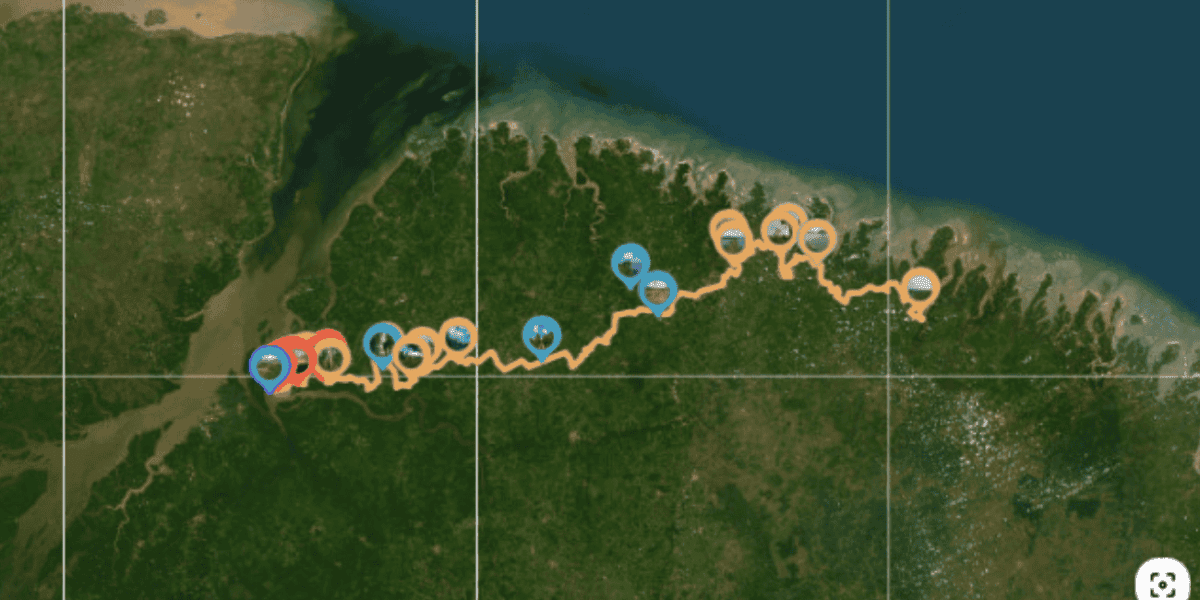
New ecological route in Pará becomes the largest marked trail in Latin America and a milestone for nature tourism.
Announced during COP30, the Amazon Atlantic Trail is a 468-kilometer route designed to promote sustainable tourism and conservation in the state of Pará.
The trail offers an authentic Amazon experience, allowing visitors to immerse themselves in the region’s biodiversity and culture while connecting protected areas, historic sites and local communities.
The program was launched by the Government of Brazil through the Ministry of Tourism and the Ministry of the Environment and Climate Change on Friday, 14 November, at the “Conheça o Brasil” (Get to know Brazil) stand at COP30 in Belém, Pará. The initiative aims to attract international visitors and strengthen domestic tourism by combining environmental conservation, leisure and promotion of jobs and income.
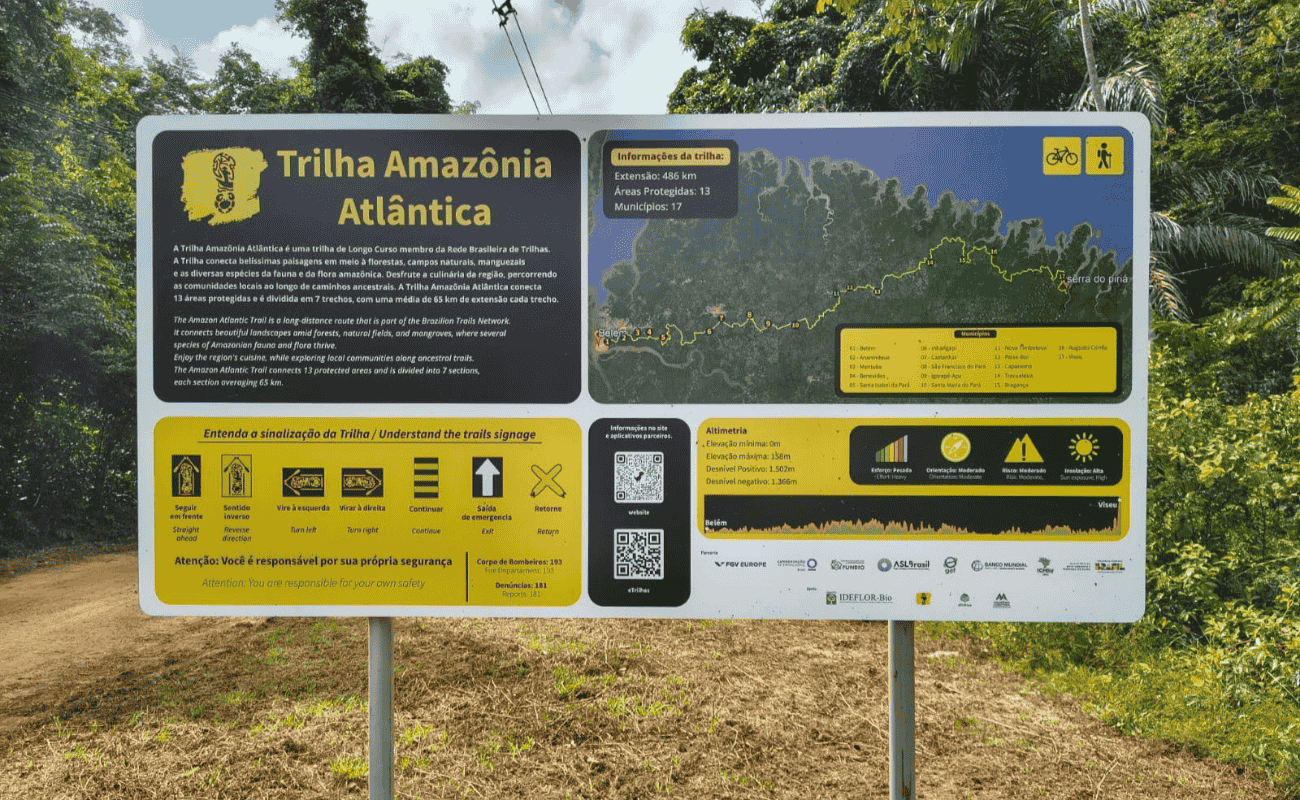
Photo: Diego Bastos
Amazon Atlantic Trail (468 km)
The trail is divided into seven segments that cross 17 municipalities and 13 protected areas, including seven conservation units and six quilombola territories.
Key sections include:
- Belém (historic center)
– Urban areas, parks and forested stretches
– Departure point toward Vila de Caraparu - Caraparu → Castanhal
– Passage through four quilombola territories - Castanhal → Capanema
– Route along the historic Belém–Bragança Road - Capanema → Nova Olinda
– Crossing of the Bragantine Natural Fields - Nova Olinda → Bragança → Augusto Corrêa → Viseu
– Final segments toward the border with Maranhão - Mirante da Serra do Piriá (endpoint)
– Panoramic views of the Amazon rainforest
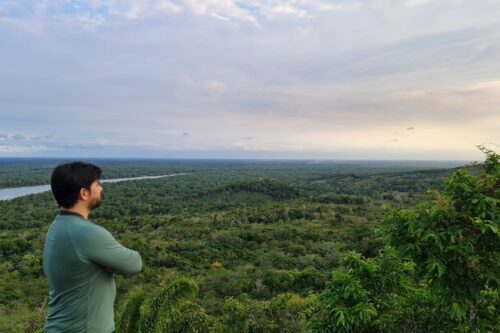
Photo: Ministry of the Environment and Climate Change
Cultural immersion and economic empowerment
The trail increases the visibility of local communities and generates direct income opportunities. Visitors can learn about the daily life of extractive populations such as crab gatherers, babassu harvesters, small farmers and fishers, while experiencing the region’s forests, mangroves and areas of significant Amazonian beauty.
“This trail comes from diverse communities, from those who make handicrafts, prepare tacacá and sell food. It brings these communities into the spotlight, allowing them to sell more and reach more people and, in doing so, gain greater recognition and a stronger sense of belonging”, said Ana Carla Lopes, acting Minister of Tourism and executive secretary of the Ministry of Tourism.
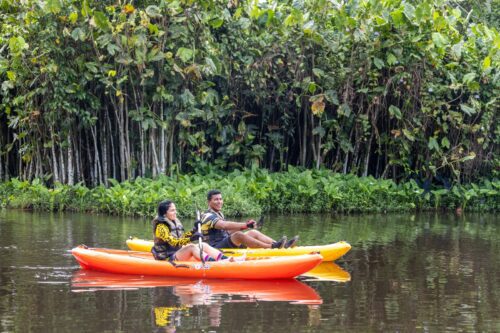
Photo: Ministry of the Environment and Climate Change
Tourism aligned with conservation
Visitors are exposed to the daily life of extractivists, farmers, fishers and quilombola communities as they cross forests, mangroves and important natural areas. The initiative was designed to align tourism, environmental protection and development.
“The trail does not cause deforestation, it protects. With it we promote sustainable development by creating jobs and providing training.”
Ana Carla Lopes
(Acting Minister of Tourism and Executive Secretary of the Ministry of Tourism)
According to ICMBio, the trail strengthens conservation policies that integrate people and territories:
“Conservation units exist to integrate territories and people. The Trails Network is a national policy that is strengthened when it is born from communities, quilombolas, municipalities and everyone involved. It is an example of how Brazil can show the world the richness of its environmental, cultural and gastronomic features.”
Carla Guaitanele
(Deputy Director for the Creation and Management of Conservation Units at ICMBio)
Visitor support via mobile app
The eTrilhas app provides comprehensive information about the route, nearby services and direct contact with local providers. The trail is expected to receive 10,000 visitors in its first year. The route can be traveled on foot, by bicycle or on horseback.
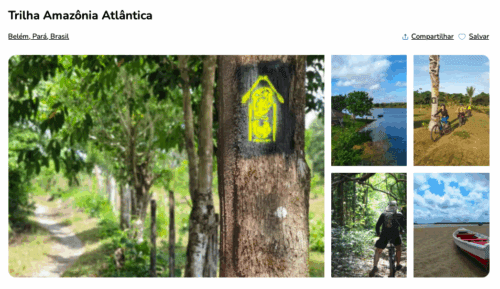
Sources: Secretariat for Social Communication of the Government of Brazil, Agência Brasil, COP30 and eTrilhas
Read also