



10 facts explaining the erosion of the petrodollar
10 de April de 2026
Oil shock: is the worst still ahead?
14 de May de 2026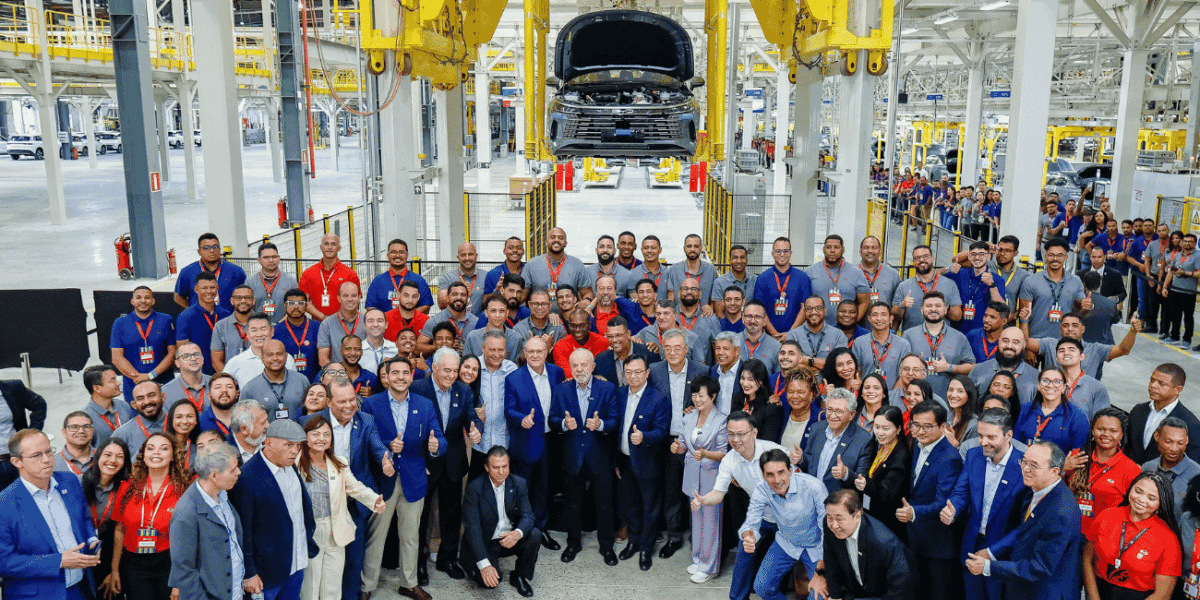
From its discreet arrival with electric buses in 2015 to record-breaking retail sales in 2026: how BYD became the most desired automotive brand among Brazilians.
In less than a decade, BYD has gone from an unknown player to the top-selling brand in the Brazilian retail market. The Chinese manufacturer has turned the country into its largest market outside of China.
2026 has been the year of consolidation: the Dolphin Mini has become a sales phenomenon. In the first quarter alone, there were 37,637 sales — a growth of nearly 74% over 2025. In April, BYD reached a new milestone by seizing the retail leadership with 14,911 units sold, overtaking Volkswagen.
With the largest electric and hybrid vehicle plant in Latin America in operation in Camaçari (Bahia) and a network of 125 fast chargers spread across the country, BYD is a success story between two BRICS nations.
First Steps: arrival of BYD in Brazil
The history of BYD in Brazil began in 2015, long before passenger cars. The company set up its first factory in Campinas (São Paulo), dedicated to electric buses, solar panels and energy storage systems.
At the time, the goal was to transform Brazil into a logistics and production base in Latin America, leveraging BYD’s global expertise across four major sectors: automotive, rail transport, electronics and renewable energy. The operation began modestly, but laid the foundation for everything that would follow.
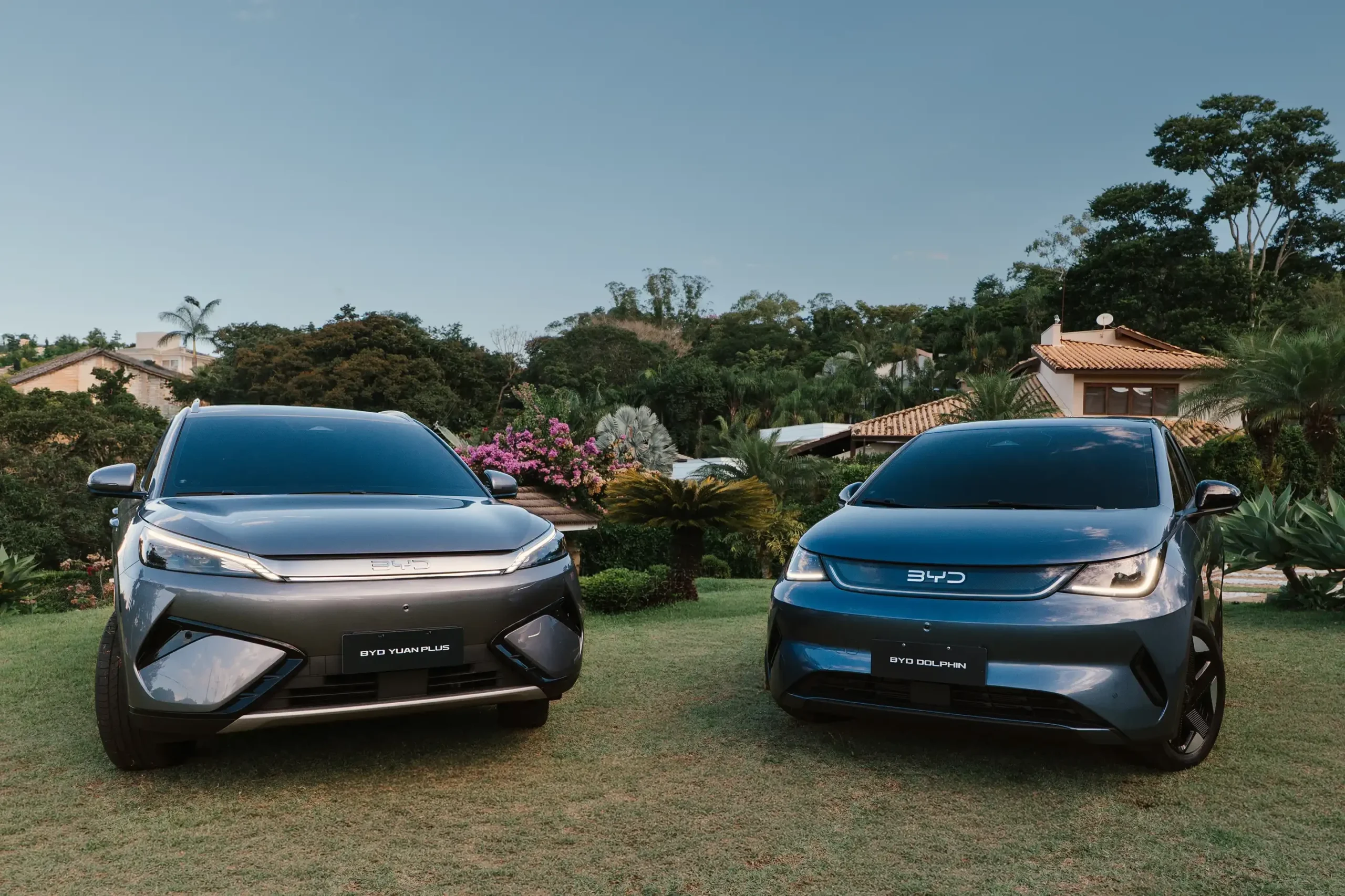
Photo: BYD
Turning point: from buses to passenger cars
In 2022, BYD sold only 260 cars, but the leap was exponential: 17,900 in 2023, 76,700 in 2024 and 112,900 in 2025 – securing the brand’s debut in the national industry’s Top 10. In 2026, BYD consolidated its strength in retail, the segment that highlights end-consumer interest.
In the first quarter, it had overtaken Fiat, Chevrolet, Hyundai, and Toyota. In April, it reached the top, leading retail sales (with 14,911 units sold) and surpassing Volkswagen. Performance was driven by the Dolphin Mini (5,900 units) and the Song line hybrids (4,100 units).
In the year-to-date total, BYD now holds the retail leadership and the fifth position in the overall ranking (including direct sales to fleet owners).
Camaçari Megafactory: hub of the Brazilian strategy
The major industrial milestone occurred in October 2025 with the inauguration of the BYD factory in Camaçari (Bahia), built on the site of the former Ford complex. It was an investment of R$ 5.5 billion.
The industrial hub has a total area of approximately 4.6 million m² (equivalent to hundreds of football fields). The initial capacity is 150,000 cars per year, with plans to reach 300,000 in the second phase and up to 600,000 vehicles per year when in full operation.
As for job and income creation, the factory has around 4,000 direct workers (the vast majority being Brazilians) and approximately 3,700 contractors in the expansion works. In April 2026, BYD announced 1,654 new positions for the third shift, aiming to surpass 6,000 direct employees soon.
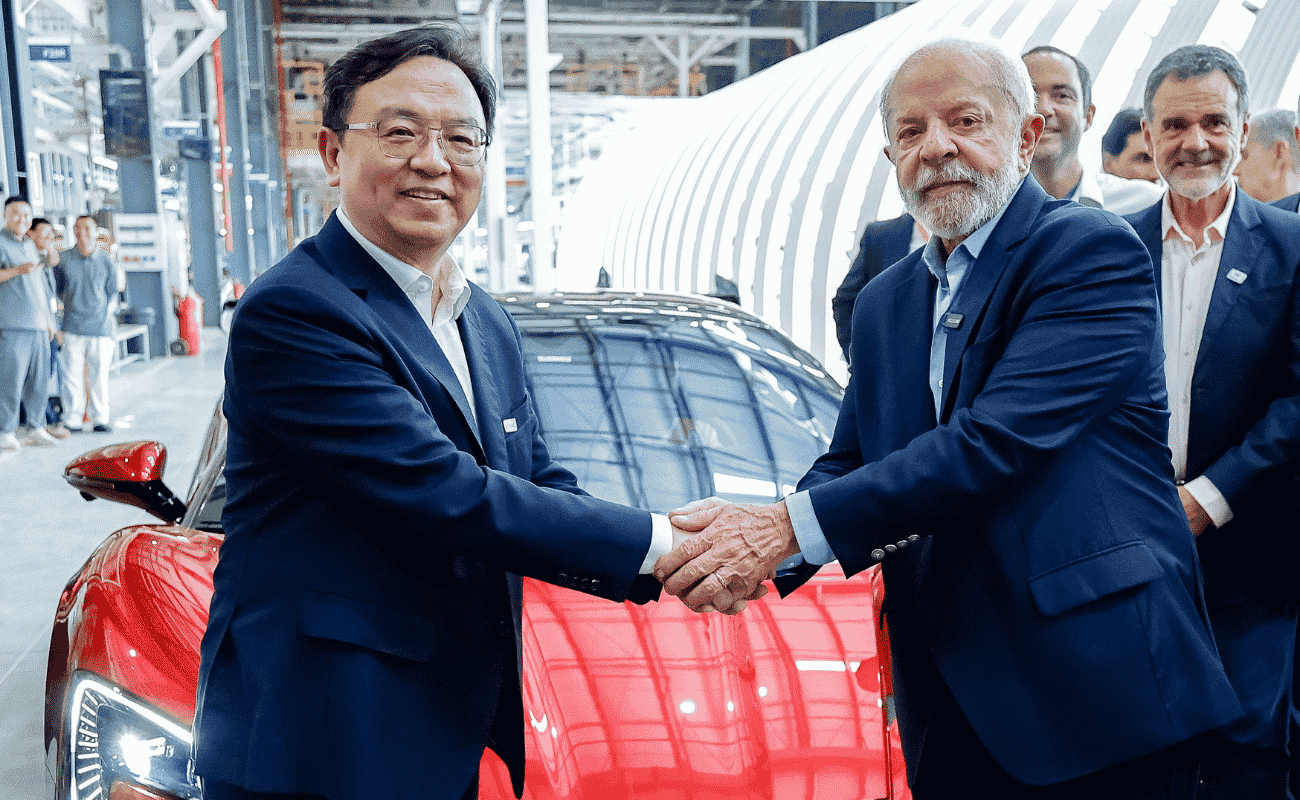
Wang Chuanfu, founder and global CEO of BYD, with president Lula at the Camaçari factory in Bahia (Photo: Ricardo Stuckert/PR – Agência Brasil)
Launches and expansion of charging infrastructure
BYD continues to innovate. In April 2026, it launched the Dolphin Special Edition and the Yuan Plus 2027 with all-wheel drive, expanding its portfolio for different consumer profiles.
At the same time, the company is investing heavily in infrastructure. Today, it already operates the largest public network of fast chargers in Brazil, with 125 points installed and intends to reach 225 by the end of 2026.
The BYD Recharge app has 166,000 registered users, a jump of 177% compared to June 2025. The goal is to install 1,000 ultra-fast chargers by the end of 2027.
Why Brazil is Strategic for BYD
The country became BYD’s largest market outside of China and houses its largest electrified vehicle factory in Latin America – a double record that no other global operation of the company achieves. The nationalization goal is ambitious: 50% of the parts for cars manufactured locally by 2027.
In May 2026, BYD announced the construction of an Automotive Evaluation and Testing Center in Rio de Janeiro, with an investment of R$ 300 million, reinforcing its commitment to research and development in Brazil.
With all this, the company raised its sales target to 250,000 vehicles in 2026, which would represent 10% of the national market.
Conclusion
The history of BYD in Brazil proves that long-term planning, robust industrial investment and local adaptation can transform an unknown into a protagonist in less than 10 years.
An example of this is the world’s first flex-fuel plug-in super-hybrid, tailored for the country. Its engine accepts ethanol, gasoline and electricity – transforming the driver’s experience. Brazilians gain the autonomy to choose their fuel source based on convenience, cost or their specific route.
The most recent proof came in April 2026, when BYD overtook Volkswagen and assumed the lead in Brazilian retail – a feat few imagined just three years ago.
The electromobility race is just beginning – and BYD is already ahead, uniting cutting-edge technology with the energy plurality that has always been Brazil’s strength.
Cover photo credit: Ricardo Stuckert / PR – Agência Brasil