


Brasília will host the BRICS Forum from September 15 to 17
4 de September de 2025
BRICS Forum to discuss culture, peace, prosperity and happiness
12 de September de 2025
In a meeting with BRICS+ leaders, president Lula emphasized economic unity, peaceful conflict resolution and the empowerment of the Global South.
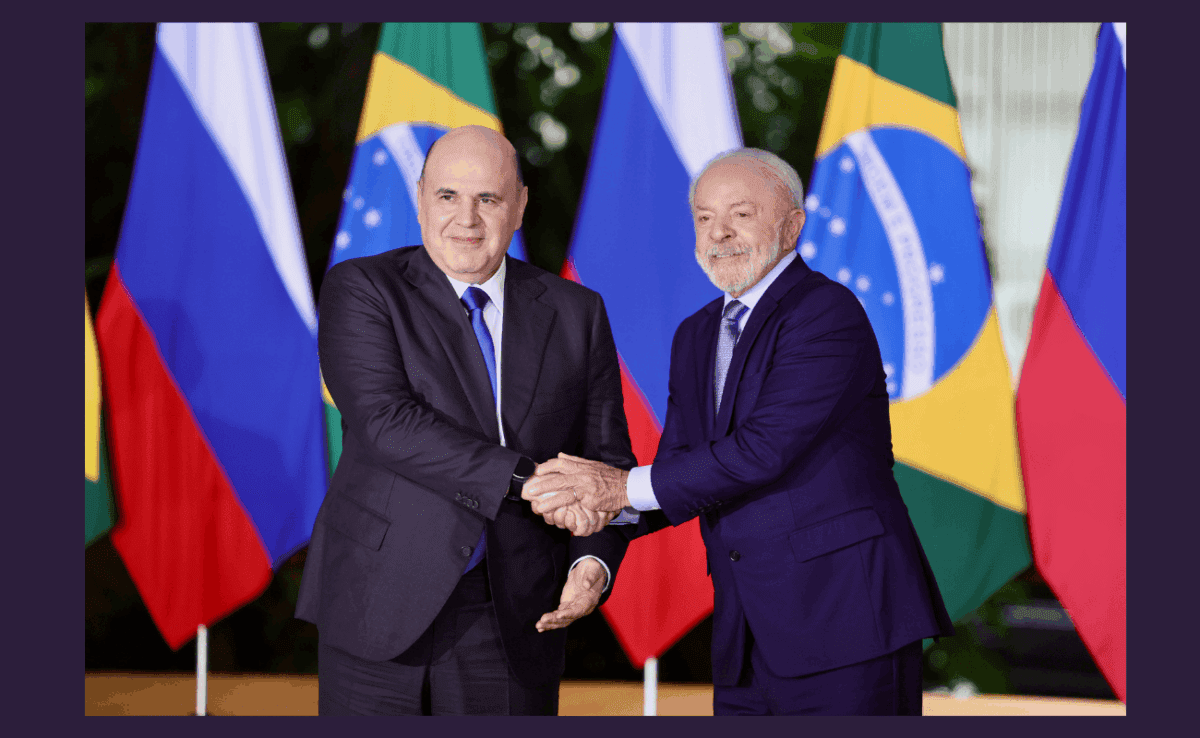
On Monday, September 8, leaders of the BRICS nations held a virtual summit to discuss strategies for boosting trade among member states and assess the global economic landscape. Hosted by Brazilian President Luiz Inácio Lula da Silva, the meeting addressed challenges such as unilateral trade practices and extraterritorial sanctions, which undermine economic freedom and national sovereignty.
During the summit, Lula said “tariff blackmail is being normalized as a tool to gain markets and interfere in domestic affairs”. He added that unilateralism aims to “divide to conquer”, and it is up to the BRICS to demonstrate that cooperation can overcome any form of international rivalry.
Participants of the Virtual BRICS Summit
The meeting included the following leaders:
- Brazil: President Luiz Inácio Lula da Silva
- China: President Xi Jinping
- Russia: President Vladimir Putin
- India: Foreign Minister Subrahmanyam Jaishankar
- South Africa: President Cyril Ramaphosa
- Egypt: President Abdel Fattah el-Sisi
- Indonesia: President Prabowo Subianto
- Iran: President Masoud Pezeshkian
- United Arab Emirates: Crown Prince Khaled bin Mohamed Al Nahyan
- Ethiopia: Foreign Minister Hadera Abera Admassu
BRICS: strategic role in global trade
Lula highlighted the bloc’s legitimacy and representativeness to lead the modernization of the multilateral trading system. “Trade and financial integration among our countries offer a safe alternative to mitigate the effects of protectionism. We have numerous economic complementarities. Together, we account for 40 percent of global GDP, 26 percent of international trade and nearly half of the world’s population,” he said.
He added that the Global South is capable of proposing a new development paradigm that counters the rhetoric of a new Cold War and promotes fair and inclusive economic solutions.
Sovereignty and international peace as pillars
Another central point was the defense of state sovereignty. Lula warned that interference in domestic affairs becomes common when the principle of sovereign equality is ignored. He also emphasized the need for peaceful solutions to global conflicts, citing recent crises:
- Ukraine: pursue realistic solutions that respect the security of all parties
- Gaza Strip: halt military actions and end ongoing atrocities
Key positions of BRICS leaders
Integration and multilateralism
Chinese President Xi Jinping reaffirmed the need for a fairer and more inclusive international order. He said BRICS should act on principles of openness, cooperation and mutual benefit, defend multilateralism and promote a shared future.
Poverty reduction and economic stability
South African President Cyril Ramaphosa highlighted the importance of strengthening member economies and expanding Global South integration, focusing on hunger and poverty reduction.
Indian Foreign Minister Subrahmanyam Jaishankar called for a stable and predictable trade environment with transparent and fair economic practices to safeguard against global shocks and supply chain disruptions.
Economic potential of BRICS
Lula underscored the group’s vast potential in green industrialization, agriculture and energy resources. He also highlighted the New Development Bank’s role in economic diversification and supporting a just and sovereign energy transition.
Global events and international agenda
The Virtual Summit served as a platform to prepare for multilateral events in the second half of the year, including the 80th UN General Assembly in New York, COP30 in Belém, Brazil, and the G20 Leaders’ Summit in South Africa.
Lula noted that unilateral actions by some countries could undermine international cooperation on environmental issues, affecting energy transition, decarbonization and climate project financing. He stressed that a strengthened multilateral approach is essential to ensure globally coordinated, fair and effective environmental policies.
Energy transition and sustainability
Ahead of COP30, Lula emphasized the need for robust climate governance to enable a planned global decarbonization. He also presented the “Tropical Forests Forever Fund,” a program to compensate ecosystem services, to be launched during the conference.
He suggested fossil fuels could be strategically leveraged to finance the ecological transition and called for globally coordinated solutions grounded in science and technology.
Conclusion
The Virtual BRICS Summit highlighted the bloc’s pursuit of deeper economic integration, defense of sovereignty and peaceful conflict resolution, reinforcing its role as a global actor. The meeting consolidated the Global South’s cooperative strategy against protectionism and signaled joint action in multilateral forums, reaffirming the bloc’s commitment to a fairer, inclusive and sustainable world order.
Information provided by Agência Brasil.