



BYD in Brazil: history of the Chinese giant
3 de May de 2026
Brazil advances plan for critical and strategic minerals
24 de May de 2026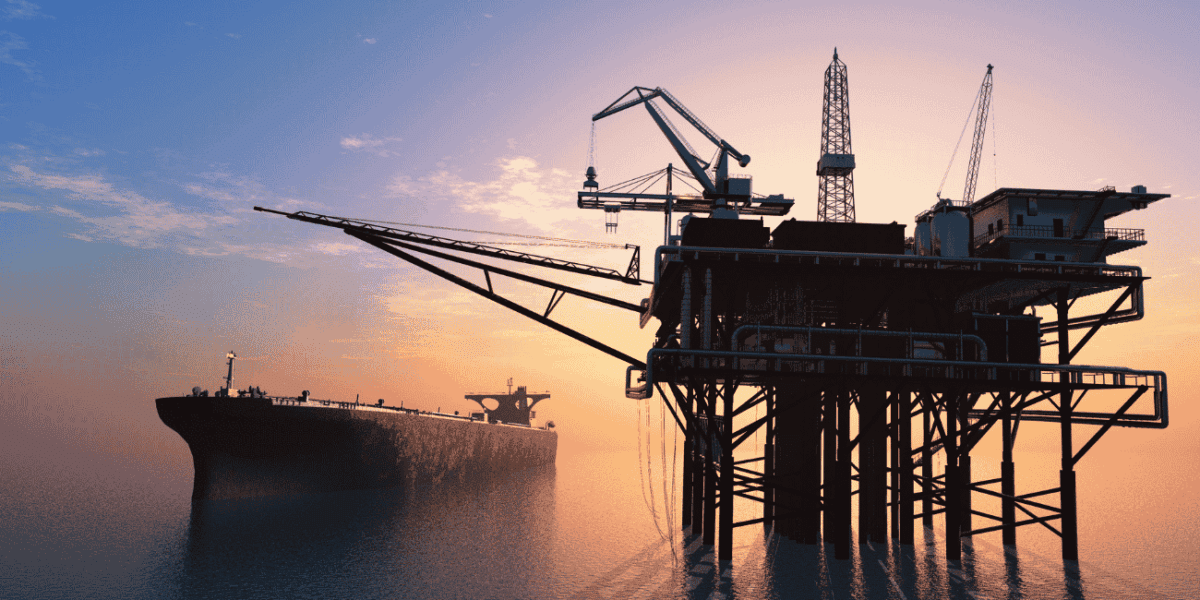
Experts are on high alert: the market is underestimating the oil shock and many claim the worst has not even begun.
05/14/2026 – The US-Israel war against Iran has triggered the largest energy crisis in history. It erupted while nations were complacent, firmly believing in the thesis of a persistent “oil glut“.
Throughout 2025 and up until the eve of the war, analysts repeatedly predicted that Brent would drop to US$55 – a conviction that, on its own, drove prices even lower.
The world caught off guard
The planet lived under the illusion that there was no geopolitical risk on the radar. The US Energy Information Administration (EIA) itself forecasted lower oil prices for 2026 and 2027, claiming that persistent stock builds would outpace consumption. In the end, the exact opposite happened.
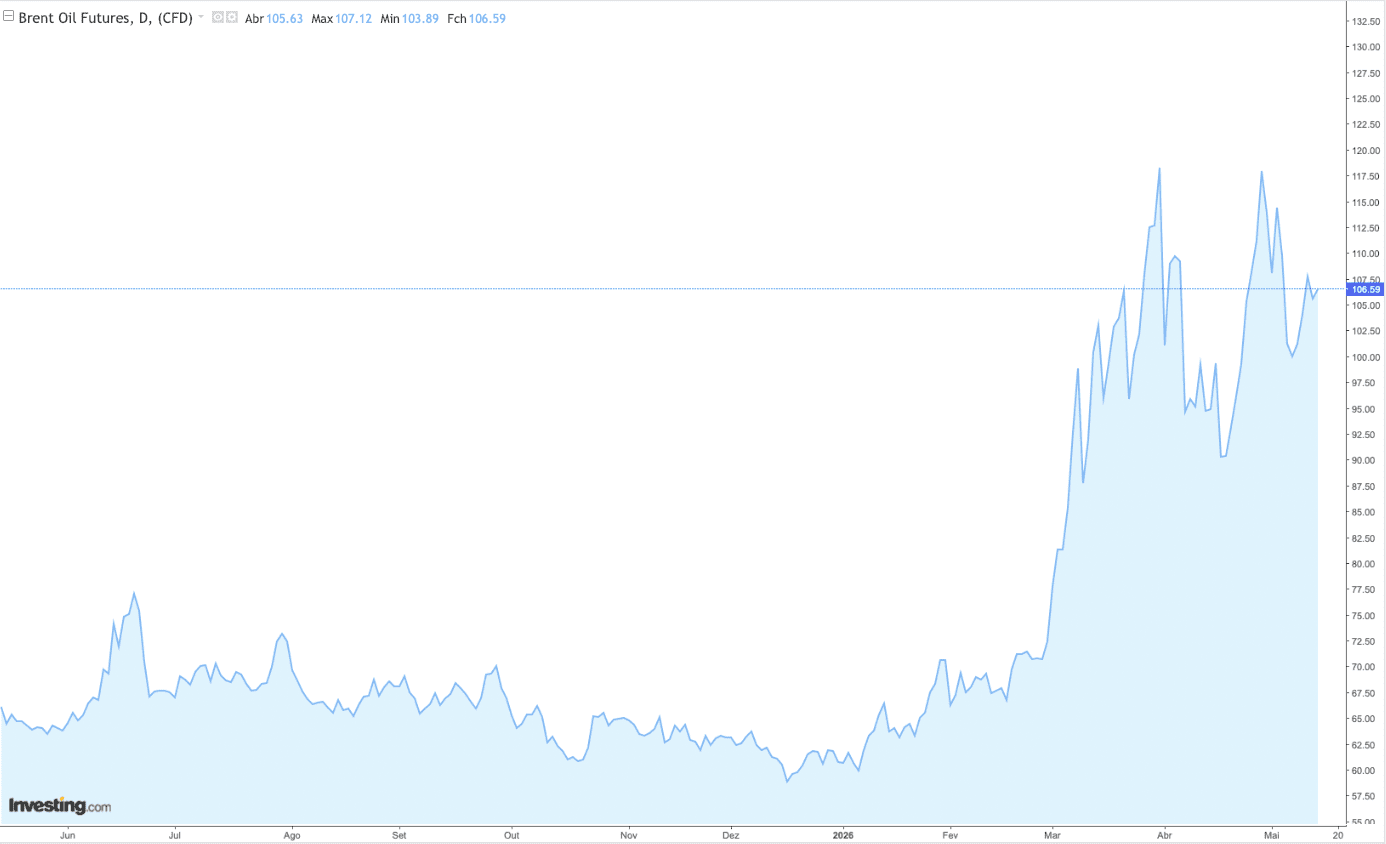
In just 6 months, Brent crude futures surged by more than 64%
The world faced a massive oil deficit. At its peak so far, spot Brent hit US$144.42 per barrel, while the Brent futures contract reached US$126.41.
Currently, while the futures market attempts to price in some stabilization, industry executives and renowned professionals warn that the situation is set to worsen, asserting that recovery will take much longer than expected.
Evidence supporting this view
1) Global oil inventories at historical lows
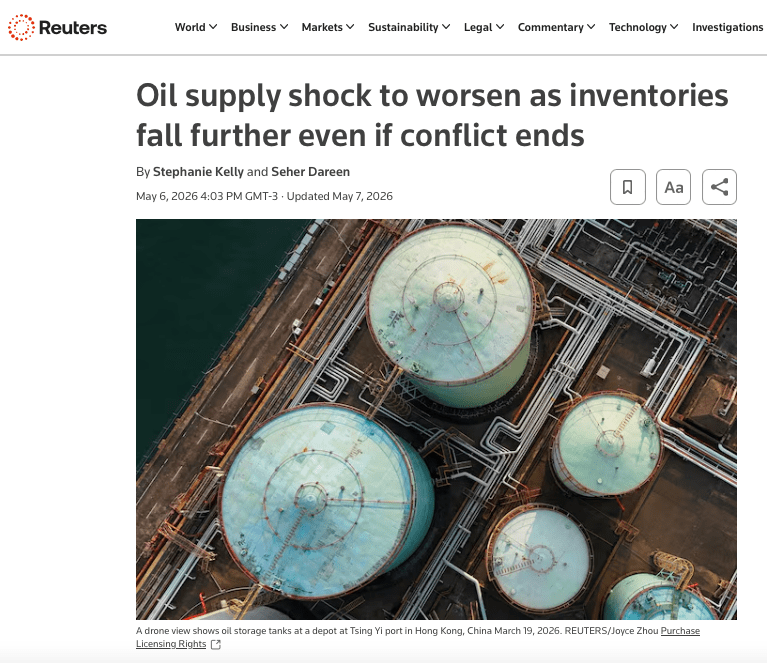
Even if the disruption ended today, there would be no immediate oversupply to drive prices down significantly. Inventories are at their lowest levels in nearly 8 years – equivalent to about 101 days of global demand, with the potential to drop to 98 days by the end of May (according to a Goldman Sachs report from May 4, 2026). In some countries, however, the situation is already critical, on the brink of collapse.
2) Strategic petroleum reserves are being burned through
Nations are consuming their final “safety cushion” (which lasts only days or weeks) to prevent an even sharper spike in current prices. Should the war drag on and strategic reserves run dry, prices could skyrocket to unimaginable levels.
On May 10, 2026, Saudi Aramco — the world’s largest oil company — warned that fuel stocks (primarily gasoline and jet fuel) were heading toward critically low levels. According to CEO Amin Nasser, if the Strait of Hormuz were to reopen immediately, rebalancing the market could take months. He further cautioned that if the blockade extends for “a few more weeks”, normalization should only occur in 2027.
China was wise to take advantage of the commodity’s lows in 2025 and early 2026 to make record purchases of crude oil (11.55 million barrels per day). The result? The world’s largest strategic petroleum reserve with nearly 1.4 billion total barrels stockpiled by the end of 2025, according to EIA estimates.
3) Peak seasonal demand in the Northern Hemisphere
This is the time of year when refineries typically build stock ahead of the summer travel peak to meet the surge in demand for road and air travel (the so-called “driving and flying season”).
“Even if the conflict ends in May, as I hope, we would emerge with clearly very low inventories”, stated TotalEnergies CEO Patrick Pouyanné recently.

System under stress: entering the driving season with critically depleted inventory creates a perfect storm for prices.
4) Damaged Persian Gulf infrastructure
Attacks have destroyed or damaged refineries, export terminals, gas plants, production fields and pipelines across Saudi Arabia, the UAE, Qatar and Kuwait. Estimates from Rystad Energy point to losses of up to US$58 billion, with more than 30 facilities severely compromised, triggering a global equipment shortage.
Full infrastructure recovery will require massive investment and will take months and years, even if the Strait of Hormuz is reopened immediately. This means a significant portion of global oil and LNG supply will remain hindered long after the war is over.
5) Massive replenishment of strategic reserves
When the conflict ends, governments and companies will rush to replenish their reserves – sustaining elevated demand for the long term. Even if prices initially correct due to a reduced risk premium, they are likely to settle at a structurally higher price range than before the crisis, amid high volatility and persistent geopolitical risks.

Global disruptive impacts
The blockade of the Strait of Hormuz (which typically handles 20% of the world’s oil) is causing a chain reaction in the global economy, particularly in import-dependent nations.
- Skyrocketing inflation worldwide
- Fuel shortages and rationing
- Risk of rising interest rates
- Canceled flights and reduced routes
- Four-day workweeks
- Mandatory remote work
- Supply chain disruptions, including fertilizers, agriculture and global food security
- Social unrest
- Recession risks
Black swan?
The energy crisis struck while the world’s guard was down. It is as if a tsunami arrived while people were on the beach sipping caipirinhas.

Although the world still seems to be in a stage of denial, the oil shock bears all the hallmarks of a black swan. It was rare, unpredictable (even for the war planners), high-impact and with the potential to trigger a domino effect of crises.
The wave arrived unexpectedly and this shock may be just the first wave. The question remains: is the worst still to come?
Unpredictability of the world
Not even the US and Israel anticipated the forceful manner in which Iran would retaliate. The aggressor nations were stunned by the closure of the Strait of Hormuz, the destruction of American bases and the use of fourth-generation asymmetric warfare tactics.
In a recent interview on American TV, Prime Minister Benjamin Netanyahu acknowledged that Israel did not foresee the closure of the Strait of Hormuz. “Nobody had perfect foresight” about Iran’s ability to block the Strait of Hormuz, he said, admitting that “the problem was understood as the fighting went on”.
Ultimately, underestimating the opponent and the geopolitical risks proved to be a strategic miscalculation on the global geopolitical chessboard.
It is impossible to predict all the global consequences of this irresponsible war that has shaken the world’s tectonic plates. The only certainty is that nothing will be as it was before. Fasten your seatbelts.

Follow my real-time updates on X: @sitebricsbrasil